Why Annual Planning Is Optimized for Comfort, Not Execution
Annual planning provides the illusion of control but often kills agility. Learn why top operators are ditching 12-month roadmaps for continuous execution cycles and how to transition your team to a high-resolution operating cadence.

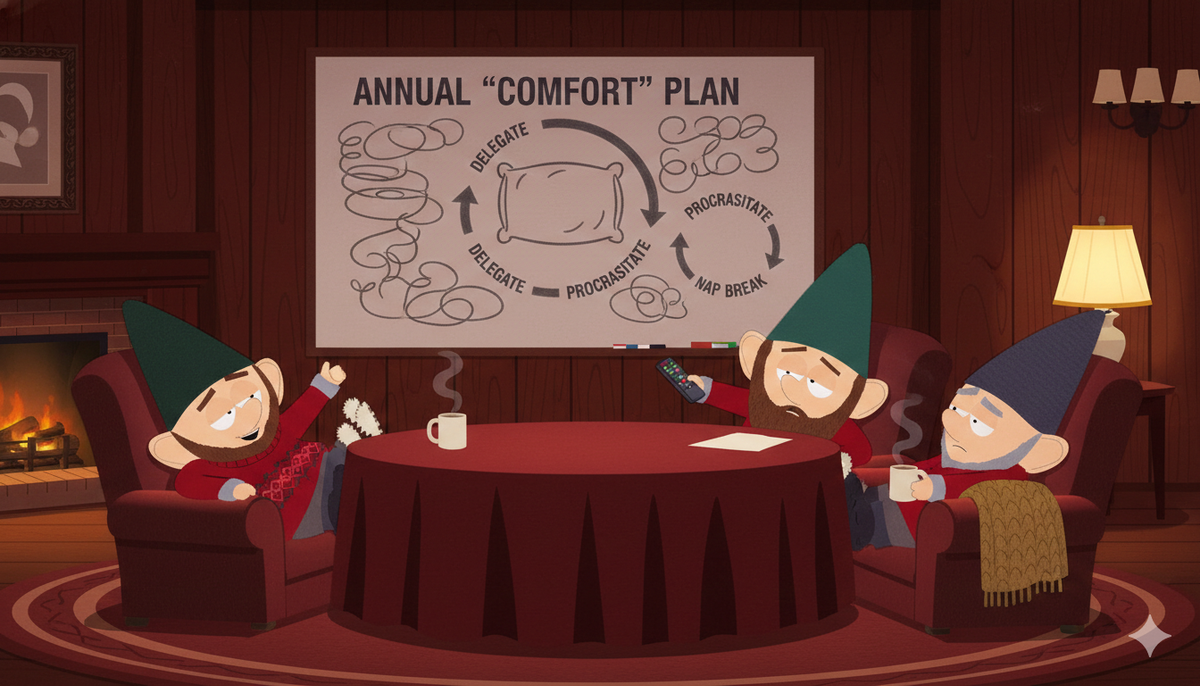
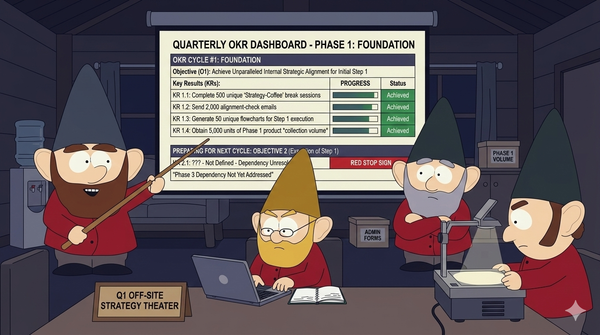
Annual planning is often the most expensive performance art in the corporate world. For six weeks every Q4, leadership teams retreat to off-sites, build massive spreadsheets, and project revenue down to the cent for a December that is fourteen months away.
We do this because it feels good. It provides the illusion of control. A 40-slide deck with a "2026 Roadmap" creates a sense of certainty that the board loves and the team finds comforting.
The problem is that annual planning is optimized for psychological comfort, not for the reality of execution. In a volatile market, an annual plan is a static document trying to govern a dynamic system. By February, the assumptions are usually wrong. By June, the plan is a ghost.
The Planning Fallacy at Scale
Most annual plans are built on the "Planning Fallacy"—the tendency to underestimate the time, costs, and risks of future actions while overestimating the benefits. When you plan for a full year, this fallacy compounds.
Operators often mistake "filling the calendar" for "setting strategy." We allocate resources to projects based on where we think we will be in nine months. When the market shifts or a competitor moves, we find ourselves locked into headcount and budgets that no longer make sense.
The cost of this comfort is agility. If you are beholden to an annual document, you aren't executing; you are complying.
Why the 12-Month Horizon Fails
The 12-month horizon is a relic of industrial-era budgeting. It works for factory outputs but fails for knowledge work and AI-native companies.
- Information Decay: The further out you project, the lower the signal-to-noise ratio. A goal set in January for November is based on the least amount of information you will ever have about that year.
- The Sunk Cost Trap: Once an annual plan is approved, teams feel a "sunk cost" obligation to finish projects even when they are clearly failing.
- False Precision: Estimating a Q4 launch date based on the previous year's Q4 is a guess masquerading as a deadline. It leads to sandbagging and protects the comfortable at the expense of the ambitious.
From Annual Planning to Continuous Execution
Strategic operators are moving away from the "Big Bang" annual plan in favor of a continuous operating cadence. This doesn't mean you don't have a North Star. It means you change how you get there.
A North Star or a 3-year vision is necessary. However, the path to that vision should be managed in 90-day high-resolution cycles.
In this model, the "Annual Plan" is simply a loose collection of four quarterly bets. You commit to the first 90 days with high intensity and leave the following three quarters in "soft focus." This allows you to re-allocate resources based on real-time data rather than historical guesses.
The Role of OKRs in Breaking the Cycle
OKRs (Objectives and Key Results) were designed to solve this, but most companies use them as "Annual OKRs," which is just the same planning problem with different labels.
To make OKRs work for execution, they must be:
- Quarterly at most: Anything longer is a dream, not a goal.
- Decoupled from fixed budgets: Resources should flow toward what is working.
- Reviewed weekly: If you only look at your OKRs once a month, you aren't running an operating system; you're keeping a diary.
Common Failure Modes in Modern Planning
Even teams that try to be agile fall into comfort-seeking traps:
- The "Shadow" Annual Plan: Saying you are quarterly but still hard-coding a 12-month product roadmap.
- Over-Documentation: Spending more time writing the OKRs than executing the Key Results.
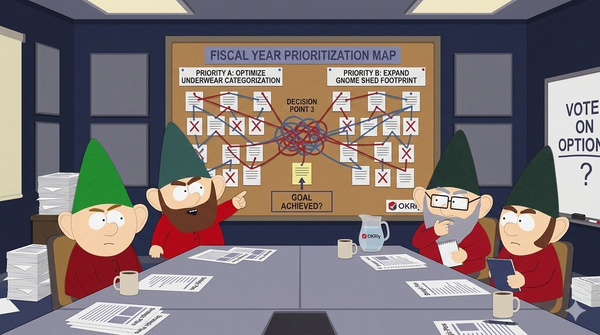
- Lack of Trade-offs: An annual plan that lists 20 "Top Priorities" is not a plan; it's a wishlist. Strategic execution requires choosing what not to do.
Decision Points for the COO
If you find your team is optimized for comfort, you have to break the cadence.
- Shorten the horizon: Move to 6-week or 12-week cycles.
- Kill the "Annual Review": Replace it with a rolling strategic refresh.
- Automate the updates: Most planning rot happens because humans hate updating spreadsheets. Use systems that pull data automatically so the "truth" of the plan is undeniable.
Execution is a muscle, not a document. The best teams aren't the ones with the most detailed annual plans; they are the ones with the fastest feedback loops.
FAQ
Why is annual planning still so common?
It provides a predictable framework for board reporting and financial budgeting. It is a tool for governance and compliance, not necessarily for competitive performance.
Does moving away from annual planning mean we have no long-term strategy?
No. Strategy is your "Where to Play" and "How to Win." It is long-term. Planning is the "What" and "When." You keep the strategy long-term but make the planning short-term to stay responsive.
How do we handle headcount if we don't plan annually?
Use a "Rolling Headcount" model. Approve a baseline and trigger additional hires based on hitting specific Key Results or revenue milestones, rather than a calendar date.
What is the best cadence for a high-growth team?
A 90-day cycle for Objectives, with a weekly "Check-in" to monitor the health of Key Results. This balances stability with the ability to pivot.
Execution CTA
The hardest part of moving to a continuous execution model is the manual overhead required to keep everyone aligned. OKRly.ai acts as your AI Chief of Staff, automating your weekly cadence so your strategy stays alive and your team stays focused on what actually matters today.
Want to Learn More?
Comfortable plans produce uncomfortable results. OKRly.ai replaces annual planning theater with continuous OKR tracking, so your team executes against reality — not last January's best guess.