The Pre-Work: How to Prepare Your Team to Write OKRs
Stop asking your team to write OKRs in a vacuum. Learn how to provide the strategic context, data, and constraints required to turn OKR planning from a quarterly chore into a competitive advantage for your execution.

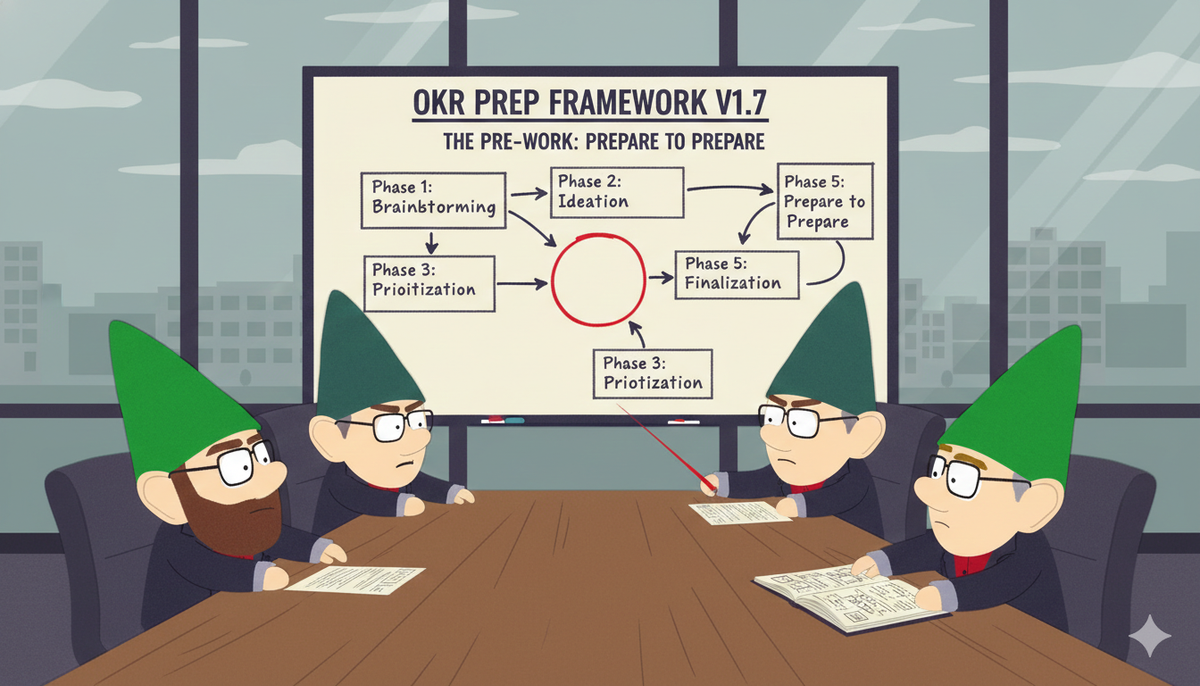
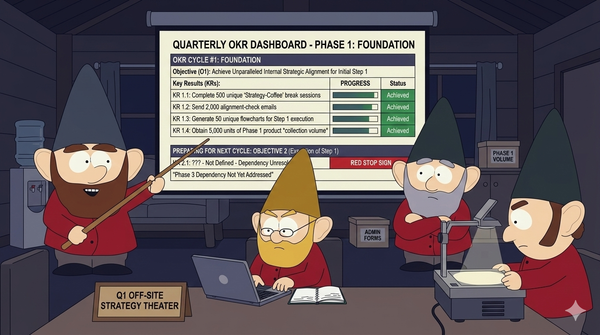
Most OKR cycles fail before they begin. The failure isn’t in drafting the Objectives or selecting the Key Results. It is in the vacuum of context that precedes the first planning meeting.
When you ask a team to "go write your OKRs," and they haven’t been properly briefed, you get a list of tasks disguised as goals. You get defensive metrics designed to be easy to achieve. You experience a lack of horizontal alignment, leading to resource conflicts halfway through the quarter.
Effective OKR planning requires a specific set of preconditions. As an operator, your job is to create the environment where the team can think strategically, not just fill out a spreadsheet.
The Strategic Context Gap
The most common mistake is assuming the team knows the priority. They don't. Or worse, they think they know, but they are wrong.
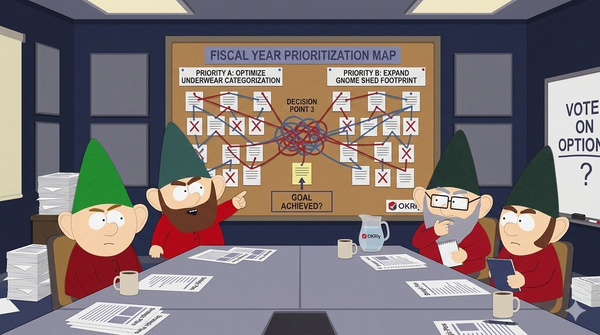
Before a single person opens a document to draft an OKR, leadership must provide the "Executive Intent." This is a high-level summary of what the company must achieve in the next 90 days. It should define the trade-offs: what are we prioritizing, and more importantly, what are we intentionally ignoring?
If the company's goal is "Growth at all costs," the team will write different OKRs than if the goal is "Path to profitability." Without this guardrail, you will spend your entire planning cycle debating the direction instead of the execution.
Step 1: Gather Your Ground Truth
Planning without data is just guessing. You need to provide the team with a "Ground Truth" packet. This should be distributed at least 48 hours before any planning session.
The packet should include:
- Performance vs. Previous OKRs: Why did we miss last quarter? Was it a failure of execution or a failure of strategy?
- Baseline Metrics: What are our current conversion rates, churn numbers, or burn rates? You cannot set a 20% improvement goal if no one knows the starting number.
- Constraint Checklist: What is the budget? Who is leaving the team? What technical debt must be addressed?
Step 2: The Pre-Mortem
Before the team starts writing what they will do, ask them what might stop them. A pre-mortem is a simple exercise: "Imagine it is three months from now and we have failed. Why did it happen?"
This identifies the "failure modes" early. If the team says, "We failed because Marketing didn't have the capacity to support our launch," you have found a cross-functional dependency that needs to be solved before the OKRs are even written.
Step 3: Define the "Unit of Progress"
Teams often struggle to write Key Results because they haven't agreed on what success looks like. Is success a shipped feature (output) or a change in user behavior (outcome)?
Operators must push the team toward outcomes. If the team is preparing to write OKRs, they need to know that "shipping the dashboard" is not a Key Result. "Reducing time-to-insight for customers by 30%" is a Key Result. Preparing them to think in terms of impact rather than activity is the hardest part of the pre-work.
Stage-Specific Preparation
The preparation changes based on the size of your organization:
- Seed/Series A: Preparation is about focus. You likely have one major goal. The pre-work is ensuring everyone knows that "staying alive" or "finding PMF" is the only thing that matters.
- Series B/C: Preparation is about dependencies. You have multiple departments. The pre-work is "market-making" between teams to ensure Engineering is actually building what Sales is selling.
- Enterprise: Preparation is about alignment with the top-level strategy. The pre-work is ensuring the "Golden Thread" isn't broken between the CEO's vision and the individual contributor's tasks.
Common Pitfalls in Preparation
- The "Bottom-Up Only" Trap: Some leaders believe OKRs should be entirely bottom-up. This results in a fragmented mess. You need a "top-down context, bottom-up drafting" model.
- Waiting for Perfection: Don't wait for perfect data. If you don't have the baseline, make "establishing the baseline" an OKR for the first few weeks of the quarter.
- The Meeting Marathon: Do not use the planning meeting to do the preparation. The meeting is for final alignment. The preparation happens asynchronously.
Why Teams Get This Wrong
Most teams treat OKRs as a quarterly chore. They rush through the drafting phase because they have "real work" to do. They don't realize that the OKR is the work—it defines what the work should be.
When you skip the preparation, you end up with "Zombie OKRs." These are goals that everyone agrees to in the meeting, but no one looks at again until the end of the quarter. They rot because they weren't rooted in reality or strategic intent.
FAQs
How long should OKR preparation take? Ideally, the preparation phase starts two weeks before the new quarter. This allows one week for context setting and data gathering, and one week for drafting and alignment.
Who is responsible for OKR pre-work? The COO or Chief of Staff usually owns the process, but the CEO must own the "Executive Intent." Department heads own the data gathering for their respective areas.
What if we don't have the data to set Key Results? Set a "learning OKR." If you don't know your baseline churn, your Key Result for month one should be "Establish a reliable churn tracking dashboard and identify the 90-day baseline."
Should we share the preparation materials with everyone? Yes. Radical transparency about the company's challenges and constraints leads to better, more realistic OKRs from the bottom up.
Preparing your team for OKRs is an investment in execution. If you give them the right context, the right data, and a clear understanding of the trade-offs, the OKRs will practically write themselves.
If you want to spend less time chasing updates and more time on strategy, you need a system that handles the cadence for you. OKRly.ai is designed to be the AI Chief of Staff that keeps your team aligned without the manual overhead.
FAQ
How long should pre-work take before an OKR planning session?
One to two weeks is the sweet spot. Enough time for teams to review last quarter's results, identify lessons learned, and come to the planning session with informed opinions. Less than a week and teams show up unprepared. More than two weeks and momentum fades. The pre-work should feel like homework, not a project.
What's the most important piece of pre-work?
Reviewing the previous quarter's OKR results honestly. Not the narrative version — the actual numbers. Which key results hit target? Which missed? Why? This historical grounding prevents the team from making the same overcommitment mistakes and gives the planning session a factual baseline instead of a blank whiteboard.
Who should do the pre-work?
Every OKR owner from the previous quarter should prepare a brief assessment of their results. Leadership should prepare the strategic context: what's changed, what the company priorities are, and what constraints exist. The planning session should start with shared context, not with building context from scratch in the room.
Want to Learn More?
Great OKRs start before the planning meeting. OKRly.ai tracks your OKR history automatically, so when planning season arrives, last quarter's honest results are already at your fingertips — no scrambling required.