The Mechanics of Drift: Why Strategy and Execution Part Ways
Strategic drift is the quiet decoupling of your strategy from your daily work. Learn the three phases of drift, why standard OKRs fail to stop it, and how experienced operators use a tight cadence and AI to maintain alignment as they scale.

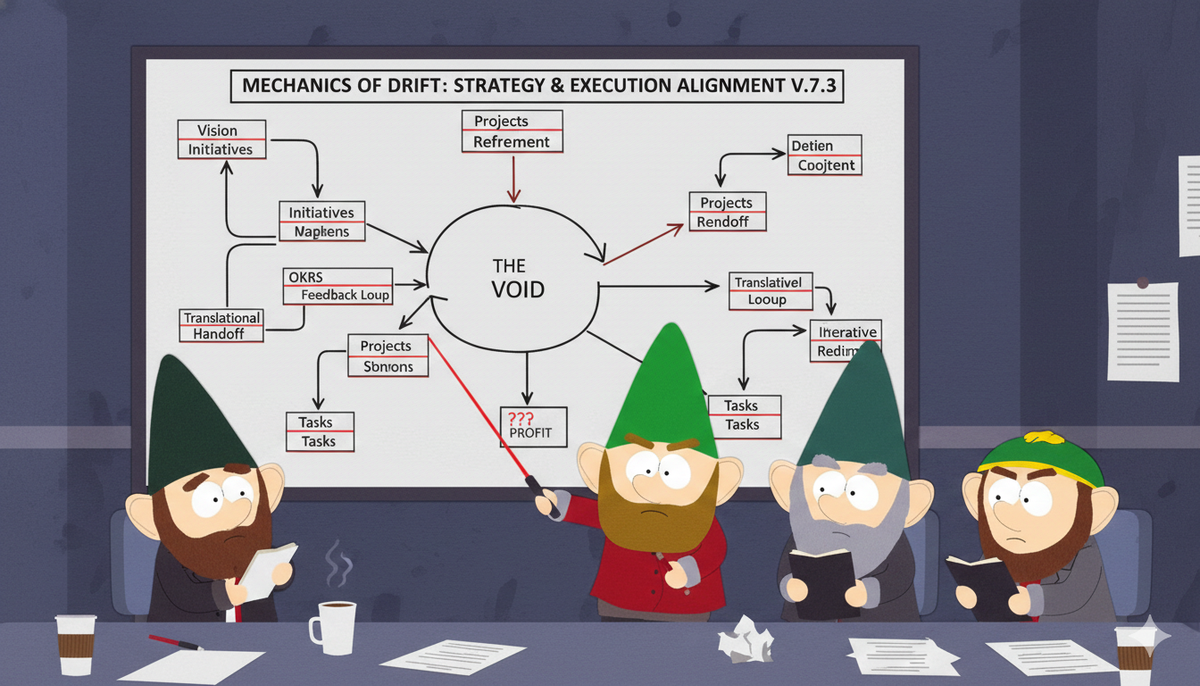
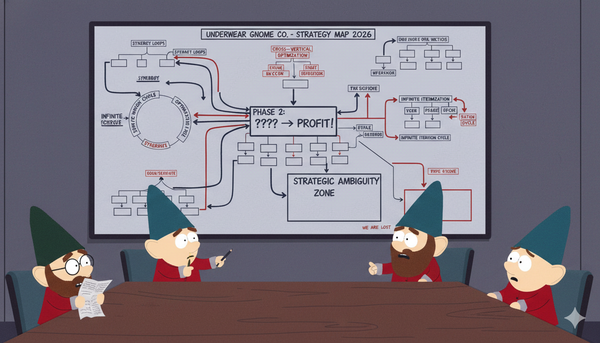
Strategic drift is not a sudden event. It is a slow, quiet decoupling of what the executive team says is essential and what the rest of the company actually does.
Most COOs don't realize they are drifting until they miss a quarterly target or a major product launch stalls. By then, the drift had been happening for months. You likely have OKRs. You likely have weekly meetings. But the "invisible work"—the projects that don't align with the strategy—has become the dominant tax on your resources.
This post breaks down the mechanics of organizational drift, how to spot the early signals, and how to tighten the connection between strategy and daily work.
The Three Phases of Organizational Drift
Drift happens in three predictable stages. Understanding where your company sits is the first step to correcting it.
Phase 1: Focus Creep
It starts with "just one more thing." A high-value customer asks for a feature that isn't on the roadmap. A team lead starts a side project to "clean up technical debt" without a clear scope. These are well-intentioned moves. Individually, they make sense. Collectively, they begin to dilute the primary objectives.
Phase 2: The Vocabulary Gap
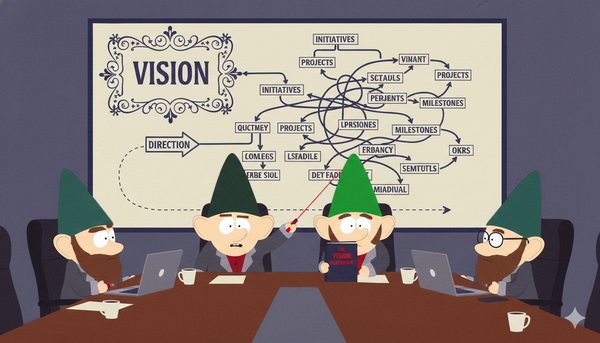
In this phase, the executive team and frontline teams use the exact words but mean different things. Leadership says, "We are focusing on enterprise growth," but the sales team defines it as "any customer with more than 50 seats." The execution begins to spread thin because the strategy's boundaries were never defined with precision.
Phase 3: Total Decoupling
This is the "Green Status" trap. Every team reports that their OKRs are on track (green), yet the company-level KPIs are stagnant or declining. This happens when OKRs are written as activities ("Ship the feature") rather than outcomes ("Increase conversion by 10%"). The teams are "successful," but the business is failing.
Why OKRs Fail to Stop the Drift
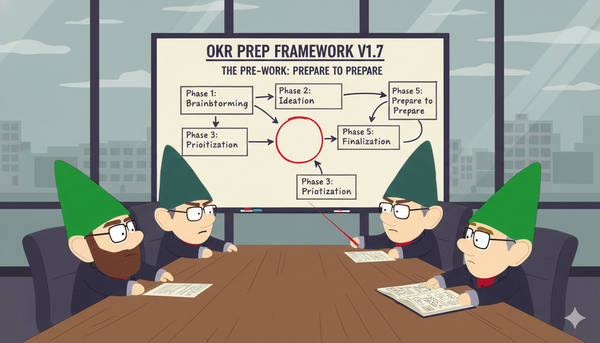
Most companies treat OKRs as a filing system. They write them at the start of the quarter, store them in a spreadsheet or a tool, and review them again 12 weeks later.
This approach fails because it ignores the Operating Cadence. OKRs do not execute themselves; they require a feedback loop that forces real-time trade-offs. If your weekly meetings are spent discussing status updates rather than roadblocks and resource reallocation, you are drifting.
The Problem with Lagging Indicators
Many leaders monitor drift using lagging indicators: revenue, churn, or market share. By the time these metrics move, the drift will be 6 months old.
To catch drift early, you must monitor the Leading Indicators of Execution:
- Resource Allocation: What percentage of engineering hours are spent on the top three objectives?
- Decision Velocity: How long does it take to kill a project that no longer aligns with the strategy?
- Confidence Scores: Does the team believe the objective is still achievable given current progress?
Failure Modes: How Drifting Teams Waste Time
As an operator, you need to recognize the symptoms of a drifting team before the board meeting. Look for these patterns:
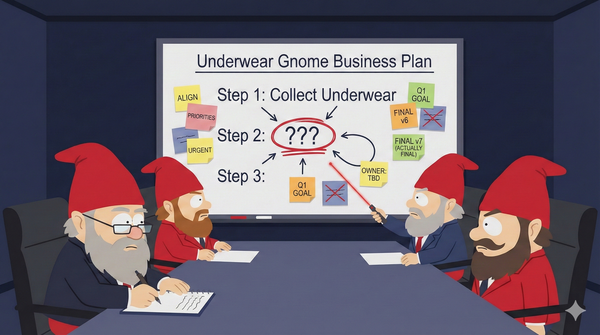
- The Shadow Roadmap: Every team has a list of "real work" they do that isn't reflected in the OKRs. If the shadow roadmap is larger than the official roadmap, your strategy is a fiction.
- The Consensus Trap: When the strategy is unclear, teams seek consensus for every move. This slows decision-making and leads to watered-down initiatives that please everyone but move nothing.
- Metric Optimization: Teams begin optimizing for metrics that are easy to move but have no impact on the business. This is the ultimate form of drift—busy people doing work that doesn't matter.
How to Correct Course: The Operator's Playbook
Correcting drift requires more than a "strategy refresh." It requires changing the company's operating mechanics on a weekly basis.
1. Tighten the Cadence
The longer the gap between checks, the further you drift. Move from a "check-in" culture to an "adjustment" culture. Every weekly meeting should ask: "Based on what we learned this week, do we need to stop doing something else to stay on track?"
2. Radical Pruning
Drift is usually caused by having too many priorities. If everything is a priority, nothing is. The COO's job is to be the "Chief No Officer." You must identify the 20% of work that will drive 80% of the outcome and ruthlessly cut the rest.
3. Use AI as a Chief of Staff
The manual burden of tracking alignment is why most leaders fail. You cannot be in every Slack channel or Jira ticket. This is where AI-native execution platforms like OKRly.ai change the math. By analyzing the work as it happens, an AI can flag misalignment before a human operator even notices the trend.
The Stage-Based Reality of Drift
The way you handle drift changes as your company grows:
- Seed to Series A: Drift is usually caused by the founder's "shiny object syndrome." Correction requires a single, narrow focus.
- Series B to C: Drift is caused by departmental silos. Correction requires cross-functional OKRs that force teams to depend on each other.
- Enterprise: Drift is systemic. Correction requires a complete overhaul of the operating system and a reduction in organizational layers.
FAQ
How do I know if my company is drifting?
Look at your "Green" OKRs. If your teams are hitting their goals but the company is missing its revenue or growth targets, you have a significant alignment drift.
Can OKRs prevent drift entirely?
No. OKRs are a tool, not a strategy. Drift is prevented by the operating cadence—the way you use that tool to make weekly trade-offs and decisions.
How often should we review our alignment?
The executive team should review high-level alignment weekly. Deep-dive "kill sessions" (where you look for projects to stop) should happen at least once a month.
What is the most significant cause of focus creep?
Lack of clarity at the top. When the CEO doesn't clearly define what we won't do, the team assumes everything is on the table.
Strategic drift is a tax on your most valuable resource: focus. Without a system that forces alignment into the daily workflow, the gap between your strategy and your execution will only widen.
If you are tired of chasing updates and want to see where the drift is happening in real-time, OKRly.ai provides the AI-driven oversight needed to keep your teams synchronized.