Strategy That Can't Be Explained in Plain Language Isn't Real
If you can't explain your strategy in three sentences without buzzwords, you don't have one. Learn why simplicity is the ultimate tool for executive clarity and how to strip away "strategic debt" to drive real team autonomy.

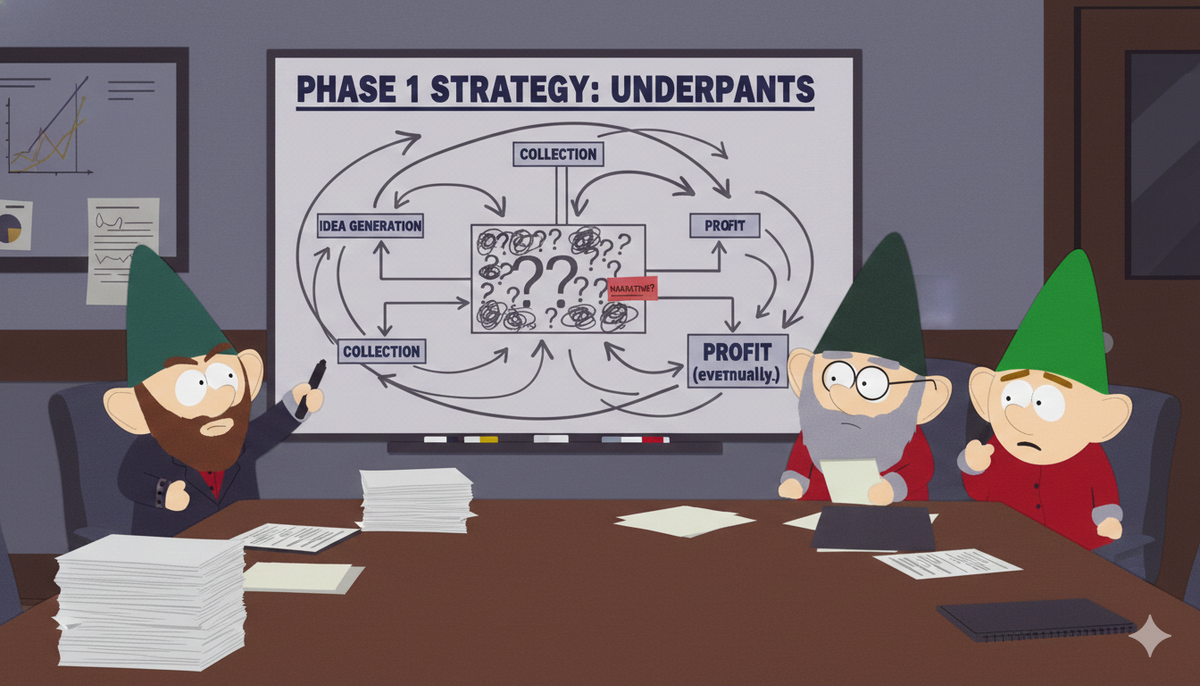
If you cannot explain your strategy to a junior engineer or a new sales hire in three sentences, you do not have a strategy. You have a collection of aspirations, a slide deck of buzzwords, or a hiding place for indecision.
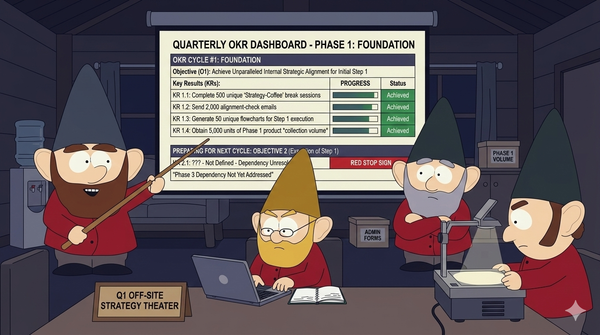
In most companies, "strategy" is treated as a high-altitude academic exercise. Executives go to a retreat, generate a 50-slide deck filled with words like "synergy," "omni-channel," and "best-in-class," and then wonder why the front-line teams are confused. Complexity is often used to mask a lack of clarity. When a strategy is vague, it allows everyone to agree because they can all project their own priorities onto it.
Real strategy is about trade-offs. It is about saying "no" to good ideas so you can say "yes" to the critical ones. If the language isn't plain, the trade-offs aren't clear. And if the trade-offs aren't clear, execution is impossible.
The Complexity Trap
Complexity in strategy usually stems from one of three failures:
Fear of Exclusion: The leadership team is afraid to leave any department out, so the strategy becomes a "laundry list" of everything the company is already doing.
Intellectual Insecurity: A belief that if a strategy is simple, it must be shallow. In reality, simplicity is the result of intense intellectual labor.
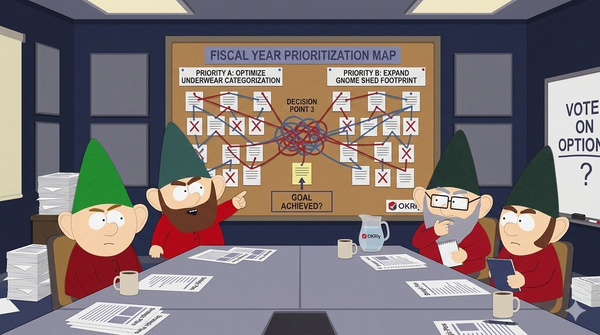
Lack of Real Choice: If you haven't decided what you won't do, you haven't made a strategic choice.
When a strategy is complex, it creates "strategic debt." This debt is paid by managers and individual contributors who have to guess which tasks actually matter when their calendars inevitably become overbooked.
The Plain Language Test
A strategy that works for an operator must pass the Plain Language Test. It should answer three questions without using a single buzzword:
- What is the specific problem we are solving?
- How are we uniquely positioned to solve it right now?
- What will we intentionally ignore to ensure we win?
If the answer involves "leveraging AI-native paradigms to disrupt the market," you have failed. A plain language answer sounds like: "We are losing customers because our onboarding takes six days. We are going to automate the data ingestion layer. We will pause all new feature development on the mobile app until onboarding takes less than ten minutes."
Why Simplicity Drives Execution
Simplicity is not for the benefit of the strategy's author; it is for the benefit of the executors. In a high-growth environment, speed depends on decentralized decision-making.
If a middle manager understands the strategy in plain English, they can make 90% of their daily decisions without having to escalate to the VP level. They know that if Task A helps the "under ten-minute onboarding" goal and Task B adds a new social sharing feature, Task A wins every time.
Complexity requires constant meetings for clarification. Simplicity enables autonomy.
Common Mistakes in Strategic Communication
Using Nouns as Verbs: Avoid "architecting," "solutioning," or "incentivizing." Use "build," "fix," and "pay."
The "And" Problem: If your strategy has five "and" statements in the primary goal, you are trying to do too much at once. A strategy should be a singular vector, not a net.
Passive Voice: "Market share will be captured." No. "We will take 5% of the market from Competitor X by undercutting their enterprise pricing."
When Simple Strategies Fail
Simplicity is a prerequisite for success, but it is not a guarantee. A strategy can be simple and wrong.
Over-simplification of the Market: You might describe a simple path that ignores a massive regulatory or technical hurdle.
Lack of Capability: "We will build the world's fastest database" is simple, but if you only have front-end developers, it isn't a strategy—it's a fantasy.
Failure to Reiterate: Even a simple strategy must be repeated until people are tired of hearing it. Operators often stop talking about the strategy just as the rest of the company is finally starting to understand it.
How Strategy Changes by Company Stage
Seed/Series A: Strategy is almost entirely about finding product-market fit. The plain language version is: "We are proving that [User Type] will pay [Price] for [Core Feature]."
Mid-Market/Scale-up: Strategy shifts to efficiency and moat-building. "We are reducing our cost to acquire customers by 30% through organic search, so we can outspend competitors on R&D."
Enterprise: Strategy is often about portfolio management and defending against disruption. "We are migrating our legacy user base to the cloud platform to prevent churn to nimble startups."
Why Teams Get This Wrong in Practice
Most teams get this wrong by mistaking "comprehensive" for "strategic." They want the strategy document to be a complete map of the world. A strategy is not a map; it is a compass. It doesn't show every tree and rock; it just tells you which way is North so you don't walk in circles when things get foggy.
FAQ
What is the difference between a mission statement and a strategy? A mission statement is why you exist. A strategy is how you will win in the next 12 to 18 months. Mission is permanent; strategy is seasonal.
Can a strategy be too simple? Only if it ignores a fundamental constraint. If your strategy is "sell more," that is a goal, not a strategy. A strategy must include the "how" and the "at the expense of what."
How do OKRs fit into plain language strategy? OKRs are the translation layer. The Strategy is the "What and Why" in plain English. The Objectives are the specific milestones for the quarter, and the Key Results are the metrics that prove you are getting there.
Who should write the strategy? The CEO owns it, but the COO and the executive team must pressure-test it for operational reality. If the people who have to execute it can't explain it, the CEO isn't finished writing it.
Bringing Strategy to Life
The hardest part of leadership isn't coming up with a clever idea; it's the relentless work of ensuring that idea is understood by the people doing the work. If your strategy is currently locked in a dense, 40-page document, archive it. Start over with a blank sheet of paper and write it out for an operator, not a board member.
Once your strategy is clear, the next challenge is maintaining the execution cadence. Most strategies die in the transition from the slide deck to the weekly meeting. OKRlyhaving to escalate helps teams bridge this gap by using AI to turn your plain-language strategy into a living operational cadence that doesn't rot in a spreadsheet.
Want to Learn More?
If your team can't explain the strategy without jargon, the problem isn't communication — it's clarity. OKRly.ai forces strategy into concrete, measurable key results that everyone understands and can act on.