The Real Cost of Strategic Ambiguity
Strategic ambiguity is a hidden tax on your company's velocity. Learn why leaders choose vague goals, how it creates "decision debt," and the framework operators use to force radical clarity and drive results.

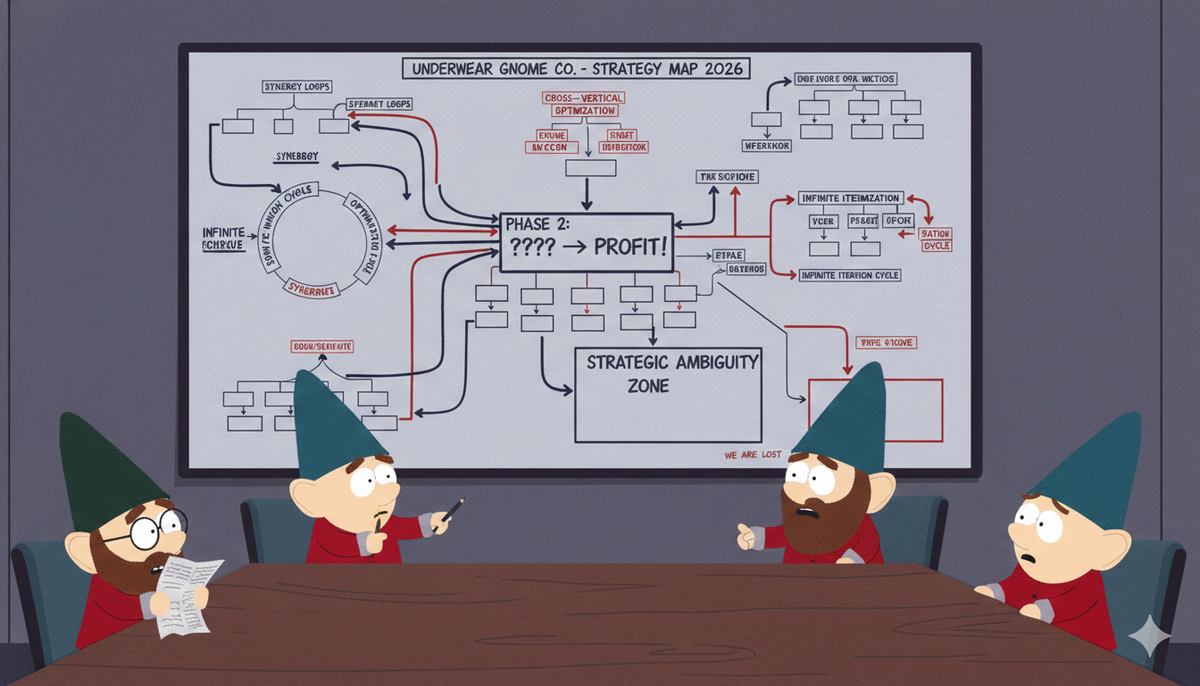
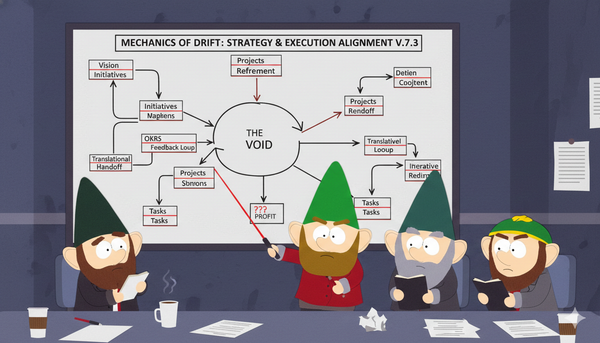
Strategic ambiguity is a choice. It is often the preferred tool of leaders who want to maintain "optionality" or avoid the discomfort of a hard trade-off. By keeping goals broad and definitions loose, they believe they are staying agile.
In practice, ambiguity is a tax on every person in the building. It forces mid-level managers to guess at priorities. It causes high-performers to burn out on low-impact work. Most importantly, it creates a vacuum that is filled by politics rather than progress.
For a COO or Chief of Staff, strategic ambiguity is the silent killer of the operating cadence. You cannot build a high-velocity execution engine on a foundation of "maybe."
What is Strategic Ambiguity?
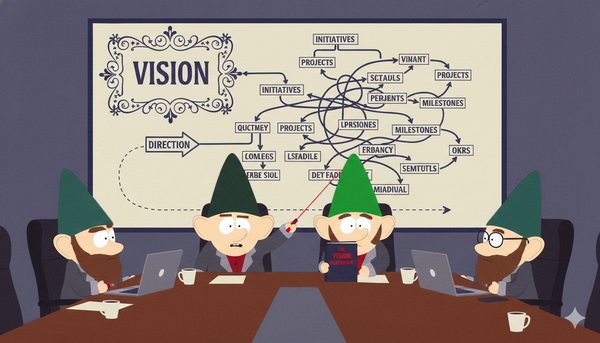
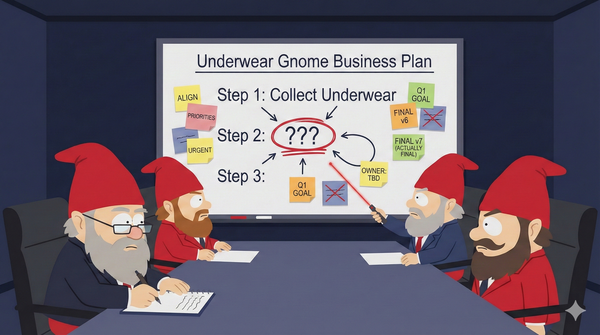
Strategic ambiguity occurs when leadership provides high-level direction that lacks the constraints required for action. It sounds like "improving customer experience" or "scaling the platform." These are not strategies; they are desires.
A strategy requires a "how" and a "not." It requires choosing one path and explicitly rejecting others. When those choices are omitted, the organization enters a state of perpetual motion without movement.
The Invisible Tax on Execution
The costs of ambiguity are rarely seen on a P&L, but they are felt in the weekly stand-up.
1. The "Second-Guessing" Loop: When a project lacks a clear "Definition of Done" or a specific objective, teams spend 30% of their time debating what the objective actually is. This is decision debt. It compounds daily.
2. Misaligned Resource Allocation: Without clear priorities, every department optimizes for its own local maximum. Marketing chases one audience while Product builds for another. By the time leadership notices the drift, quarters of engineering time have been wasted.
3. Talent Attrition: A-players thrive on impact. Ambiguity makes impact impossible to measure. When top talent realizes their hard work is being applied to moving a needle that doesn't exist, they leave for companies with clarity.
Why Leaders Choose Ambiguity
It is helpful to understand why this happens. Usually, it isn't incompetence. It is a defense mechanism.
- Fear of Being Wrong: If you don't set a specific target, you can't technically fail to hit it.
- Avoiding Conflict: Specificity requires saying "no" to someone's pet project. Ambiguity allows everyone to believe their work is still a priority.
- Misunderstanding Agility: Many founders confuse "being agile" with "having no plan." True agility is the ability to quickly change a clear plan, not the absence of one.
The Antidote: High-Resolution OKRs
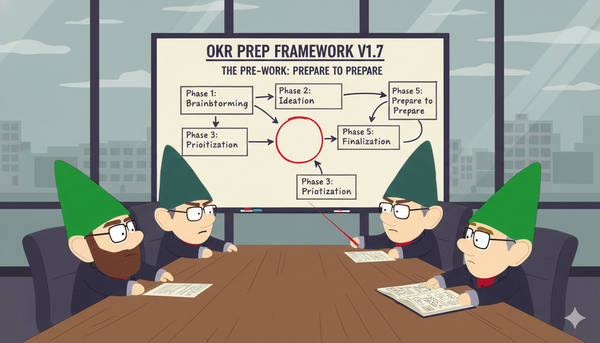
The Objective and Key Result (OKR) framework was designed to kill ambiguity, but many companies use it to mask it. They write "Soft OKRs" that are just as vague as the strategy they are meant to clarify.
To eliminate ambiguity, your OKRs must be high-resolution.
The Objective: The "What" and the "Why"
An objective must be a qualitative statement of what you want to achieve. If it doesn't describe a specific future state, it is too vague.
- Ambiguous: "Improve our sales process."
- High-Resolution: "Shorten the enterprise sales cycle to under 60 days to improve cash flow."
Key Results: The "How We Know"
Key results are the measurable proof. If a KR is "finish the project," you have failed. A KR must measure a project's outcome.
- Ambiguous: "Launch the new dashboard."
- High-Resolution: "Achieve 40% weekly active usage of the new dashboard by the end of Q3."
How Company Stage Changes the Cost
The price of ambiguity increases as the headcount grows.
- Seed to Series A: Ambiguity is expected. You are still finding product-market fit. Communication happens through osmosis.
- Series B to C: This is the danger zone. The "osmosis" breaks. Without formal clarity, the company begins to fracture into silos.
- Enterprise: Ambiguity leads to "Shadow OKRs," where different divisions actively work against each other because they lack a unified North Star.
Signs Your Strategy is Ambiguous
Look for these red flags in your next leadership meeting:
- People ask, "What does success look like for this?" more than once.
- The same decision is revisited three weeks in a row.
- Department heads describe the company's top priority differently.
- Performance reviews feel subjective because there are no clear benchmarks.
Moving from Ambiguity to Execution
Solving this requires a cultural shift toward "Radical Clarity." This doesn't mean having all the answers. It means being clear about what you don't know and what you are prioritizing right now.
As an operator, your job is to force the resolution. When a CEO gives a vague mandate, it is your responsibility to ask: "What are we choosing not to do so we can achieve this?"
Clarity is a prerequisite for velocity. You cannot have one without the other.
FAQS
How do I tell my CEO their strategy is too vague? Frame it in terms of cost. Instead of saying "this is vague," say "without a specific target here, the engineering team is currently split between two directions, which is costing us $50k a week in lost productivity."
Can a strategy be too specific? Rarely. Specificity in outcomes is good. Specificity in tactics can be stifling. Tell the team where the finish line is, but let them choose the shoes they wear to run the race.
What is the first step to fixing strategic ambiguity? Audit your current OKRs. If you can't tell if a Key Result was met by looking at a single data point, it’s ambiguous. Fix the measurement, and the strategy will follow.
Is strategic ambiguity ever useful? In high-stakes diplomacy or certain legal negotiations, perhaps. In a growth-stage company, trying to out-execute competitors? Never.
If your team is stuck in the "Second Guessing" loop, you don't need more meetings; you need a system that enforces OKRly.ai uses AI to turn vague intentions into high-resolution execution plans.