Strategy as Constraint, Not Permission
Strategy is often treated as a permission structure. It should be the opposite: a deliberate constraint system that tells teams what's out of bounds so energy concentrates instead of disperses.

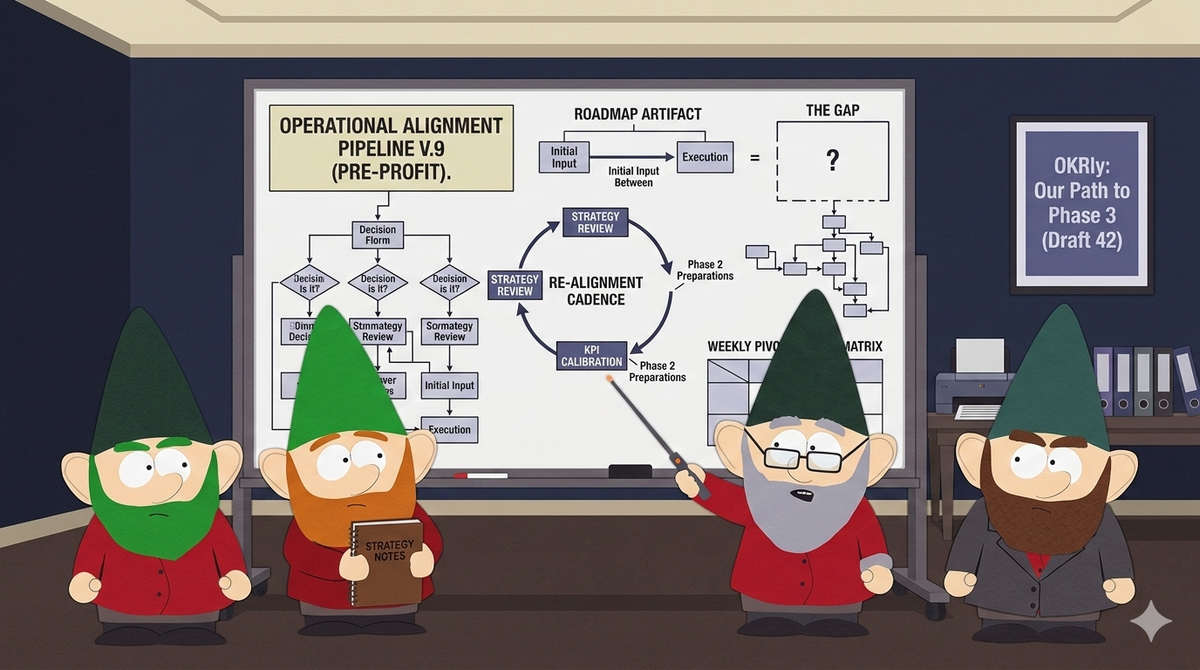
Strategy is often framed as a permission structure. Leadership sets the direction, and from there, teams are free to pursue whatever paths seem promising. Ownership is encouraged. Innovation is celebrated. The implicit message: "Here's where we're going—now go figure out how."
This sounds empowering. In practice, it often produces chaos.
The Misunderstood Purpose of Strategy
Real strategy isn't a permission slip. It's a constraint system. It's the set of deliberate choices about what you will and won't do—which markets, which customers, which problems, which trade-offs. A good strategy doesn't just tell teams where to aim; it tells them what's out of bounds.
That distinction matters enormously. When strategy is treated as permission, every team optimizes locally. Marketing runs toward brand awareness because that's their expertise. Sales pushes for quick wins in segments leadership hasn't prioritized. Product expands features because users ask for them. Everyone is technically working on what seems good—and collectively, they're pulling in different directions.
Constraints prevent this. They make explicit what the organization has decided not to pursue, so energy concentrates instead of disperses.
Constraints Are Decisions, Not Failures
There's a psychological resistance to constraint in most organizations. Saying "we're not doing that" feels limiting. It forecloses options. It means someone has to be the person who said no.
But strategy without constraint isn't strategy—it's a wish list. Every genuine strategic choice involves giving something up. Choosing to focus on enterprise customers means not optimizing for SMB. Choosing to build a platform means not building a suite of standalone tools. Choosing to compete on quality means not competing on price.
Leaders who avoid these trade-offs in the name of flexibility don't actually give their teams more freedom. They give them more ambiguity. And teams fill ambiguity with their own judgment—which, however capable, isn't the same as organizational alignment.
How Constraint Enables Speed
Counterintuitively, constraint is one of the fastest ways to accelerate execution. When the boundaries are clear, teams stop relitigating scope. They stop escalating questions that should be answerable at lower levels. They stop building contingency plans for every possible direction.
Think about how much time gets spent in organizations on "should we be doing this?" discussions. A clear constraint eliminates whole categories of those conversations. If the strategy says we're focused on retention before acquisition, teams don't need a meeting to decide whether to invest in a referral program right now. The strategy already answered it.
Constraints also make prioritization tractable. Without them, everything competes with everything else on some combination of enthusiasm and political capital. With them, teams can stack-rank against a stable set of criteria that reflects actual organizational intent.
The Leader's Job Is to Draw the Box
There's a useful mental model here: strategy draws the box, and teams work inside it. The box should be large enough for genuine creativity and initiative—but it should be a box. The edges should be real.
Drawing the box requires leaders to make and commit to choices that are uncomfortable because they're exclusive. It requires saying, explicitly: we are not pursuing this. Not right now. Not without a deliberate decision to revise strategy.
When those lines are drawn clearly, something interesting happens. Teams stop looking over their shoulder for validation on every decision. They know the rules of the game. They can move faster, experiment within boundaries, and escalate only the decisions that genuinely exceed their authority.
Revisiting the Constraints
None of this means constraints should be permanent. Strategy evolves, and the box needs to move with it. But the revision of constraints should be a deliberate act—not something that happens through drift, exceptions, or unilateral team decisions.
When a team wants to work outside the current strategy, the right response isn't to quietly let it happen. It's to make the case for why the constraint should change. That conversation forces the organization to either recommit to the existing strategy or update it explicitly—both better outcomes than letting strategic boundaries blur through inaction.
Strategy as constraint isn't about limiting what teams can do. It's about making what they should do clear enough that they can actually do it.
FAQ
Doesn't treating strategy as constraint kill innovation?
The opposite. Innovation without constraint is just tinkering. The most creative work happens when teams know exactly where the boundaries are and can push hard within them. When everything is on the table, people spread thin and hedge. When strategy tells them "we are competing here, on this, for these people," they can go deep. Constraint focuses creative energy rather than suppressing it.
What if the strategy is wrong and the constraint is limiting the right work?
Then change the strategy explicitly. The answer to a bad constraint is not to quietly ignore it — that just creates ambiguity about whether the strategy is real. If a team believes the current strategic direction is wrong, they should make the case to update it. The discipline of strategy-as-constraint forces that conversation to happen in the open rather than letting strategic drift accumulate through silent exceptions.
How do you keep strategy constraints from becoming bureaucratic?
Keep them few and clear. A good strategic constraint fits in a single sentence: "We are not building for enterprise this year." "We are prioritizing retention over acquisition." "We will not expand to new markets until current ones are profitable." If your strategy requires a 40-slide deck to explain, it is not functioning as a constraint — it is functioning as a wish list. The fewer the constraints, the more power each one carries.
Want to learn more?
Strategy only works as a constraint when it is visible and specific enough that teams can use it to make daily decisions without escalating. OKRly.ai helps leadership teams turn strategic priorities into clear operational boundaries so that every team knows what to pursue, what to ignore, and when to push back.