The Planning Fallacy and How It Kills Quarterly Goals
Every quarter, your team commits to ambitious goals. Every quarter, you fall short. It's not a motivation problem — it's the planning fallacy. Until you account for it, your quarterly planning is fiction.

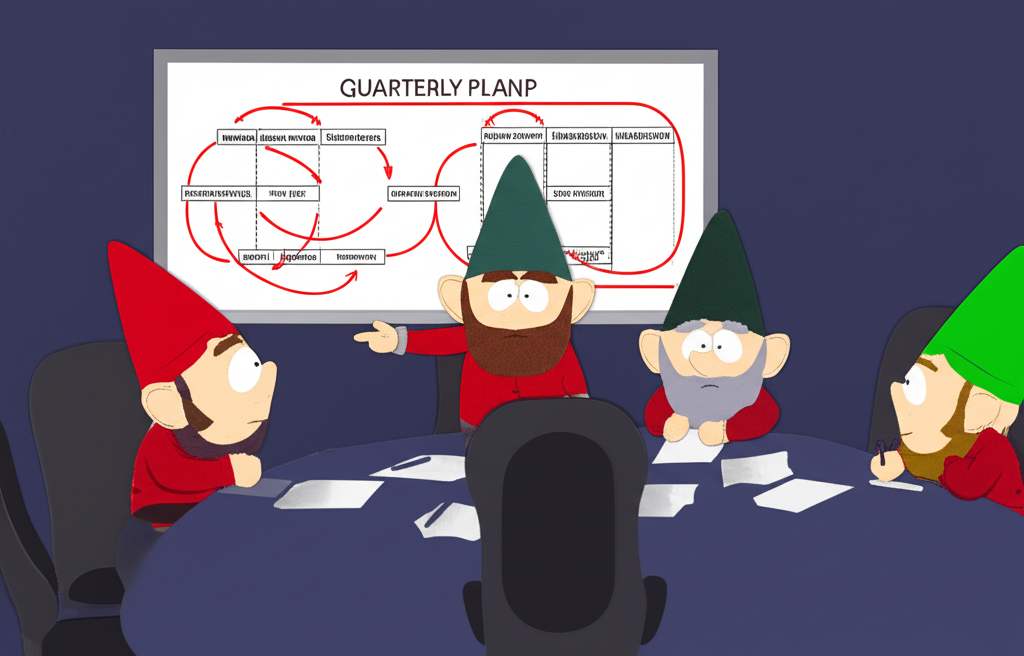
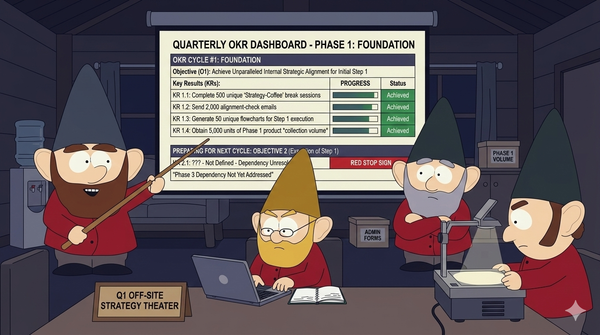
Every quarter, the same ritual plays out. Your team gathers in a room, writes ambitious goals on a whiteboard, agrees they're achievable, and walks out feeling energized. Three months later, you've hit maybe 60% of them. It's not that your team is bad at execution. It's that humans are hardwired to plan badly.
You're Not Planning — You're Fantasizing
The planning fallacy is a cognitive bias identified by Daniel Kahneman and Amos Tversky. It says people consistently underestimate how long tasks will take, how much they'll cost, and what can go wrong — even when they have direct experience with similar tasks that took longer than expected.
Applied to quarterly goals, this bias is devastating. Your team looks at a key result like "Launch v2 of the onboarding flow" and estimates eight weeks. They're not lying. They genuinely believe it. They're imagining the best-case scenario: no surprises, no dependency bottlenecks, no one gets sick, no priorities shift mid-quarter.
That's not a plan. That's a fantasy with a deadline.
Why the Quarterly Cadence Makes It Worse
The quarterly cycle is the perfect incubator for the planning fallacy. Three forces conspire against you.
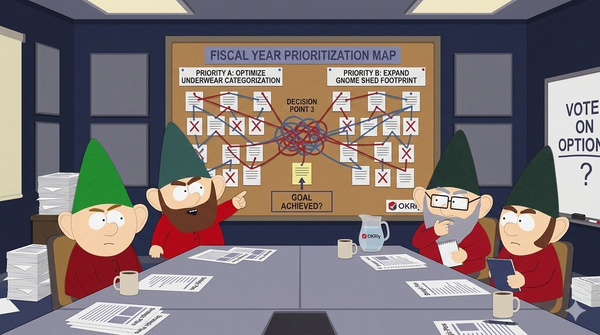
First, the planning window is compressed. You get one or two sessions to define the entire quarter's work. There's social pressure to commit, to show ambition, to fill the roadmap. Nobody wants to be the person who says, "Actually, I think we can only do two things well this quarter."
Second, you're planning from the inside. You're looking at the work from the perspective of your intentions, not your track record. Kahneman calls this the "inside view" — you focus on the specifics of the task and ignore base rates. You don't ask "How long did similar initiatives take us last quarter?" You ask, "How long should this take?" Those are very different questions.
Third, the stakes feel abstract at planning time. Missing a quarterly goal in January doesn't sting. By March, it stings plenty. But the pain is separated from the decision by twelve weeks, so you never update your planning model when it actually matters.
Plan Like a Historian, Not an Optimist
The antidote to the planning fallacy is what Kahneman calls the "outside view" — and it's almost offensively simple.
Stop asking "What do we think we can do?" Start asking "What did we actually do?"
Pull up last quarter's results. Count how many key results you completed versus how many you planned. If you planned ten and shipped six, your hit rate is 60%. Plan this quarter accordingly. Set six key results. Or set ten, but only treat six as hard commitments and four as stretch.
This isn't pessimism. It's calibration. Your team's historical track record is the single best predictor of future performance. Better than enthusiasm. Better than headcount projections. Better than whatever the CEO said at the all-hands about this being "the quarter we execute."
Add an explicit buffer to every timeline. If an initiative "should take four weeks," plan for six. Not because your team is slow — because reality is unpredictable and you've been proving that to yourself every quarter for years.
Run pre-mortems before locking your OKRs. Ask the team: "It's the end of the quarter, and we missed this goal. What went wrong?" You will hear risks that were too uncomfortable to surface during the optimism of planning season.
The 20-Minute Audit You Can Run Today
Pull up your last three quarters of OKR results. For each quarter, write down three numbers:
- Key results planned
- Key results completed (hit 70% or more of the target)
- Your completion rate
Average those three completion rates. That's your planning accuracy score.
Now look at this quarter's plan. If your historical completion rate is 55% and you've committed to 12 key results, the math says you'll ship about 7. Is that acceptable? If not, cut scope now — while it's cheap — instead of scrambling in month three when it's expensive.
This exercise takes 20 minutes. It will save you an entire quarter of misdirected effort and the demoralizing end-of-quarter scramble that everyone pretends is normal.
FAQ
What is the planning fallacy in simple terms?
The planning fallacy is our tendency to underestimate how long things take and how much they cost, even when past experience consistently shows we underestimate. It's not about laziness or incompetence — it's a genuine cognitive bias that affects individuals, teams, and entire organizations equally. The only reliable fix is to use historical data rather than intuition as your planning baseline.
How does the planning fallacy specifically affect OKRs?
It causes teams to set more key results than they can realistically achieve. Teams plan based on best-case scenarios rather than historical performance, which leads to chronic underdelivery quarter after quarter. Over time, this erodes trust in the OKR process itself — people stop taking the goals seriously because they know the plan was never realistic to begin with.
Can you eliminate the planning fallacy completely?
No. It's built into how human cognition works. But you can mitigate it dramatically. Use your actual completion rate from previous quarters as the baseline for planning. Add time buffers to every estimate. Run pre-mortems before committing to plans. And track predicted versus actual timelines so your planning model improves over time instead of repeating the same mistakes.
Want to Learn More?
If your team keeps overcommitting and underdelivering each quarter, the problem isn't effort — it's the planning process itself. OKRly.ai tracks your OKR progress in real time, surfaces completion trends across quarters, and helps you set goals grounded in what your team actually delivers — not what it hopes to.