Annual Planning is a Hypothesis; Continuous Execution is the Reality
Annual plans are often obsolete by Q2. Learn how operators use continuous execution and rigid operating rhythms to bridge the gap between yearly strategy and weekly reality without the administrative overhead.

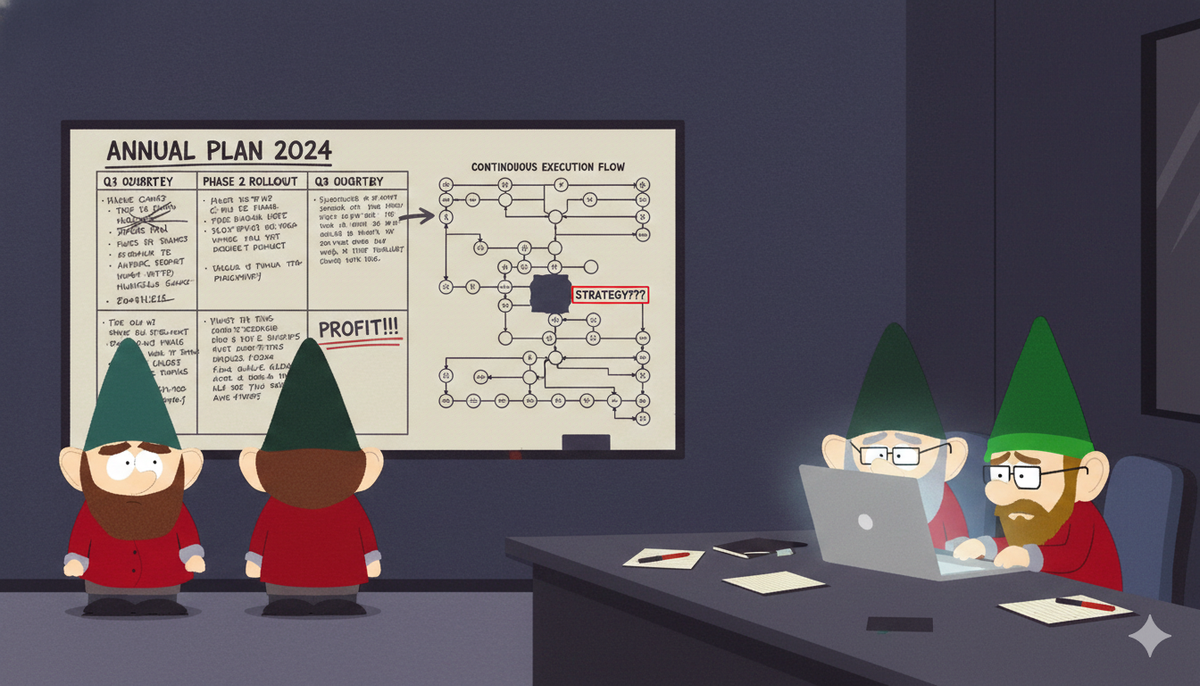
Most annual planning cycles are exercises in fiction. We spend October through December debating resource allocation and market forecasts, only to see those assumptions evaporate by March. For the operator, the "Annual Plan" is not a static document. It is a baseline hypothesis.
The real work isn't in the planning; it is in the continuous execution. This is the discipline of maintaining alignment between long-term intent and weekly output, even when the environment changes.
The Fallacy of "Set and Forget"
The primary reason annual plans fail is the "set and forget" trap. Leadership teams often treat the annual kickoff as the finish line of strategy. In reality, it is the starting line of a 52-week feedback loop.
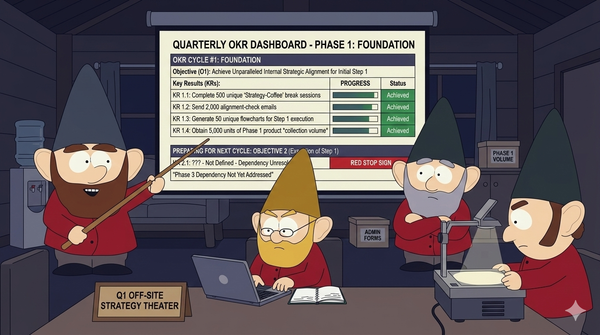
When you decouple planning from execution, you create a "strategy gap." The executive team stays anchored to the January slides, while the engineering and product teams respond to the reality of February's bugs and March's churn. Without a mechanism for continuous execution, these two groups drift apart until the Q2 review, where the misalignment finally becomes visible—and expensive.
Bridging the Gap: The Operating Rhythm
Continuous execution requires a rigid operating rhythm. This isn't about more meetings; it's about better signal. An effective rhythm typically consists of three nested loops:
- The Annual North Star: The high-level "Where are we going?" This rarely changes.
- The Quarterly OKR Cycle: The "How do we measure progress this season?" This is where strategy meets capacity.
- The Weekly Execution Loop: The "What did we actually do?" This is where the plan lives or dies.
The magic happens in the transition between these loops. If your weekly updates don't explicitly roll up into your quarterly OKRs, you aren't executing—you're just busy.
When to Pivot: The Operator's Dilemma
A common mistake in "continuous execution" is pivoting too early or too late.
Pivoting too early: You never give your strategy enough time to compound. You react to a bad week of data rather than a trend.
Pivoting too late: You dogmatically follow a "Key Result" that is no longer relevant because the market or the product changed.
Operators must look for "Structural Signal." If a key assumption in your annual plan is proven false—e.g., a partnership falls through, or a competitor launches a direct clone—you don't wait for the next quarterly planning session. You adjust the OKRs immediately. Continuous execution means the plan is always kept up to date with the latest data.
The Role of AI in Modern Execution
Historically, maintaining this alignment was the manual, thankless job of a Chief of Staff or a COO. They spent hours chasing updates, reconciling spreadsheets, and nagging team leads for "the Friday email."
AI-native platforms like OKRly.ai shift this from a human-push model to a system-pull model. Instead of a human asking another human for status updates, the system monitors the work and helps identify "drift" as the updates come in. This allows the leadership team to spend less time "tracking" and more time "correcting."
Common Failure Modes in Execution
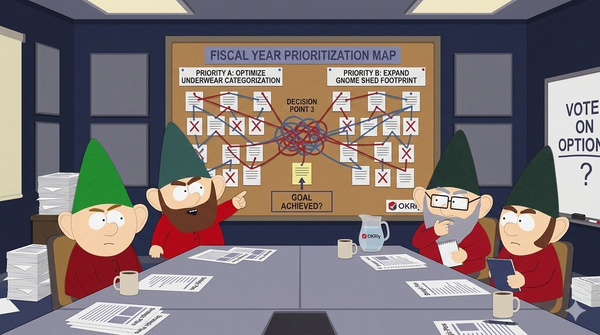
The KPI Graveyard: Teams track 50 metrics, none of which drive the strategy.
The Shadow Roadmap: The team is working on projects that aren't in the OKRs because "they just need to get done."
Executive Absence: Leadership sets the OKRs but never mentions them in weekly All-Hands.
FAQ
How do I stop my team from ignoring OKRs mid-quarter? Integrate OKRs into your existing rituals. If they aren't the first thing discussed in your weekly leadership meeting, the team will correctly assume they aren't the priority.
Is annual planning still necessary? Yes. You need a long-term destination to ensure your quarterly sprints aren't just running in circles. Think of the annual plan as the map and continuous execution as the GPS.
What is the difference between an OKR tracker and an execution system? A tracker is a passive record of what you hoped to do. An execution system, like OKRly, is an active participant that flags risks, automates updates, and ensures the weekly cadence actually happens.
Moving Toward a Continuous Model
Stop treating your annual plan as a sacred text. Start treating it as a living document that requires weekly validation. The goal isn't to be "right" in January; it's to be aligned in December (and hopefully right, right?).
If you find yourself spending more time formatting slides than unblocking your team, your execution model is broken. Transitioning to an AI-assisted cadence like OKRly.ai can reduce administrative overhead, letting you focus on the trade-offs that drive growth.
Want to Learn More?
Annual plans are hypotheses. Treat them that way. OKRly.ai tracks your OKRs in real time so you can validate assumptions quarterly and adjust before a bad plan costs you the whole year.