The Translation Layer: How Operators Move Strategy from Slides to Reality
Strategy is a choice; execution is a behavior. Learn how operators build a "translation layer" to bridge the gap between high-level slides and daily reality, ensuring your team stays focused on what actually moves the needle.

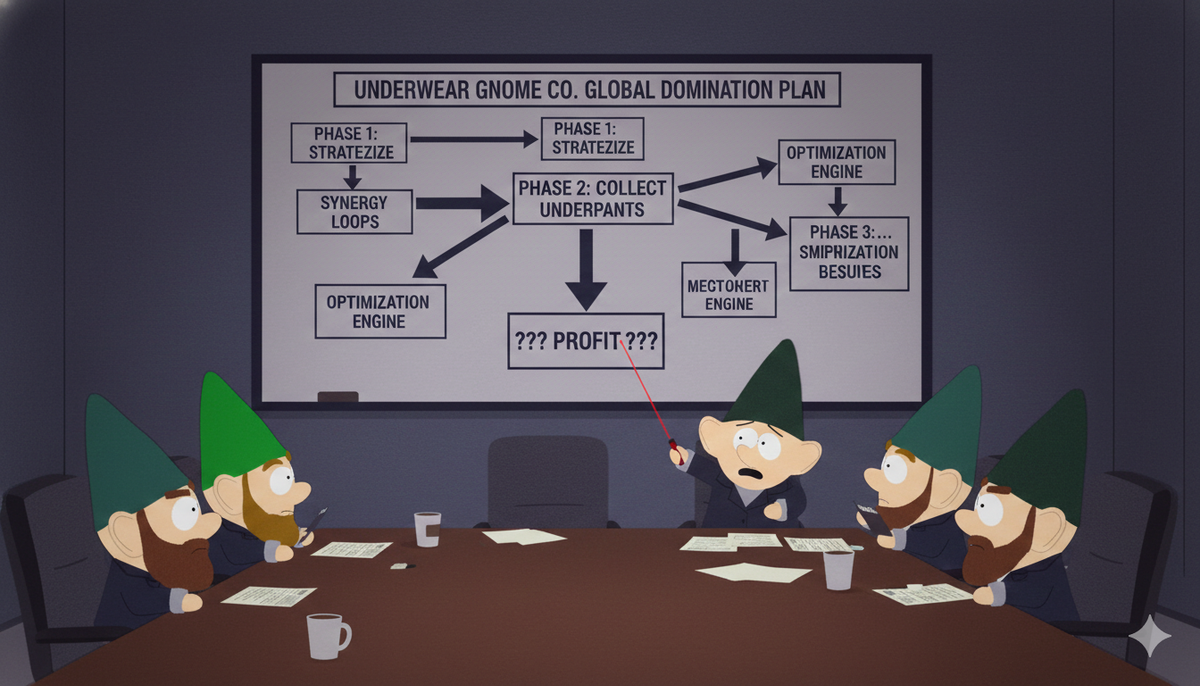
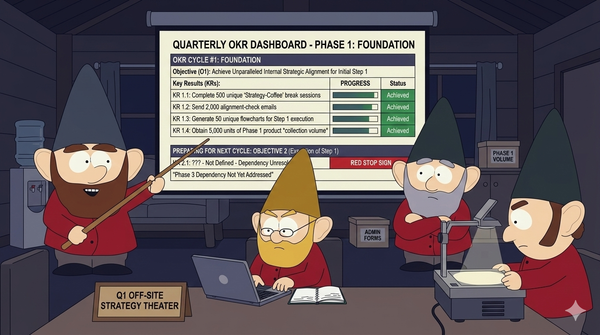
Most strategies die in the middle. Leadership spends weeks in meetings and at off-sites, produces a deck of ambitious pillars, and presents them to the company. For three days, everyone is aligned. By week two, the organization has reverted to its previous state: reactive, siloed, and busy with work that doesn't move the needle.
The failure isn't the strategy. It is the lack of a translation layer. Strategy is a choice of where to play and how to win; execution is the daily behavior that makes those choices real. The gap between them is usually filled by "hope" or "status reports."
An operator's job is to build a mechanical bridge between the two. This is not about motivation. It is about architecture.
Strategy is a Set of Constraints, Not a To-Do List
The first mistake is treating strategy like a project list. A good strategy should tell your team what not to do. It provides the constraints that allow decentralized decision-making.
When an engineer or a marketing lead has to choose between two priorities on a Tuesday afternoon, the strategy should be clear enough that they choose the one aligned with the company's long-term direction without needing to ask for permission. If they can't, your strategy hasn't been translated; it's just a document.
The Problem with High-Level Pillars
"Improve Customer Experience" is a pillar. It is useless for execution. To translate this, an operator must define the specific lever. Does it mean reducing support response time? Improving UI consistency? Or perhaps firing the bottom 5% of customers who drain resources?
Translation requires moving from the abstract to the measurable. Operators do this by creating "Strategic OKRs" that act as the first level of the coil.
The Three Stages of Strategic Translation
Moving strategy into reality requires a consistent rhythm. You cannot set it once a year and expect it to hold.
1. The Decomposition Phase
Take your top-level strategic objectives and break them into quarterly outcomes. If the strategy is "Expand into the Enterprise market," the quarterly outcome is not "Work on enterprise." It is "Close 3 deals over $50k" or "Complete SOC2 Type II audit."
The goal here is to identify the leading indicators of success. By the time you see revenue (a lagging indicator), it is too late to change your execution. You must measure the work that drives revenue.
2. The Resource Realignment
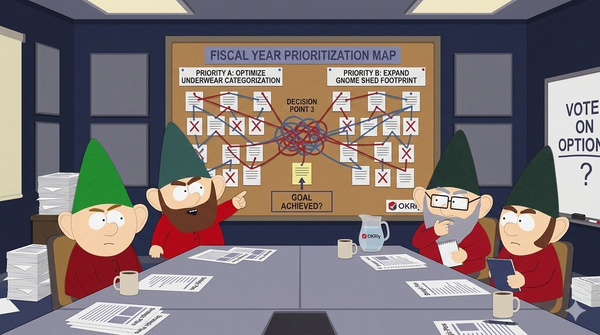
Strategy is ultimately an exercise in resource allocation. If your strategy changed but your calendar and your budget didn't, your strategy is a lie.
Operators must look at the "Run the Business" (RTB) vs. "Change the Business" (CTB) ratio. Most teams are 90% RTB. If your new strategy requires significant change, you must explicitly clear the plate. This often involves the "Stop Doing" list—the most painful but necessary part of the translation layer.
3. The Feedback Loop (The Cadence)
Execution happens in the weekly cycle. This is where most organizations fail. They check OKRs once a month. In a fast-moving company, a month is an eternity.
The weekly cadence should focus on:
- Blockers: What is stopping us?
- Confidence levels: Based on what we know today, what are the chances we will hit the goal?
- Adjustments: Do we need to pivot the tactic to save the objective?
Why the Middle Management Layer is the Friction Point
The "frozen middle" is a common complaint, but it is rarely the managers' fault. It is a failure of the system. Middle managers are under the most pressure to maintain the status quo (RTB) while being told to execute the new strategy (CTB).
Without a clear translation system, they default to what they know: keeping their teams busy. To fix this, operators must give managers a framework that clearly and mathematically links their team's specific KPIs to the strategic pillars. When a manager can see that their team's "Site Latency" metric is a direct sub-component of the "Enterprise Readiness" strategy, the friction disappears.
Failure Modes in Translation
- The "Set and Forget" Mentality: Treating OKRs like a quarterly chore rather than a weekly operating system.
- Measuring Activity, Not Outcomes: Tracking "Features Shipped" instead of "Usage Increase."
- Lack of Truth: Creating a culture where it is not okay to be "Red" or "Off Track." If your dashboard is always green but the company isn't growing, your translation layer is broken.
- Over-complication: Having 15 OKRs. If everything is a priority, nothing is. An operator's job is to ruthlessly prune the list down to the 3-5 things that actually matter.
Scaling the Translation: Seed vs. Series B
The way you translate strategy changes as you grow. In a 10-person startup, the CEO is the translation layer. Communication is high-bandwidth and constant.
At 50 or 100 people, the CEO cannot be in every room. You need a platform that enforces the logic. You need an AI Chief of Staff who can look across all teams and identify where the strategy is being ignored. It's about moving from "management by walking around" to "management by exception."
FAQ
How often should we review the strategy-to-execution link?
While the strategy might be annual, the translation (OKRs) must be quarterly, and the execution check-in must be weekly. Anything less frequent allows drift to set in.
What if the strategy changes mid-quarter?
An operator doesn't panic. You reset the translation layer. Stop the current OKRs, acknowledge the sunk cost, and realign the team. It is better to lose two weeks of work than to spend three months on misaligned execution.
Who owns the translation layer?
In most high-performing companies, it is the COO or Chief of Staff. They are the "Calm Operator" who ensures the CEO's vision is converted into a repeatable machine.
How to Build Your Translation Engine
Translation isn't a one-time event; it's a discipline of maintaining alignment through every turn of the organizational coil. Most teams fail because the manual overhead of tracking these connections is too high.
OKRly.ai serves as your digital translation layer, automatically connecting daily work to strategic outcomes with AI. It removes the "reporting tax" so your team can focus on the work that actually moves the needle.
Want to Learn More?
Strategy doesn't execute itself. Someone has to translate the slides into sprints. OKRly.ai bridges the gap between strategic intent and team execution with OKRs that connect boardroom goals to weekly work.