The Silent Gap Between Strategy and Execution
Most companies don’t fail because they chose the wrong strategy — they fail because the strategy never made it to the ground. Here’s why the execution gap exists and how high-performing companies close it.

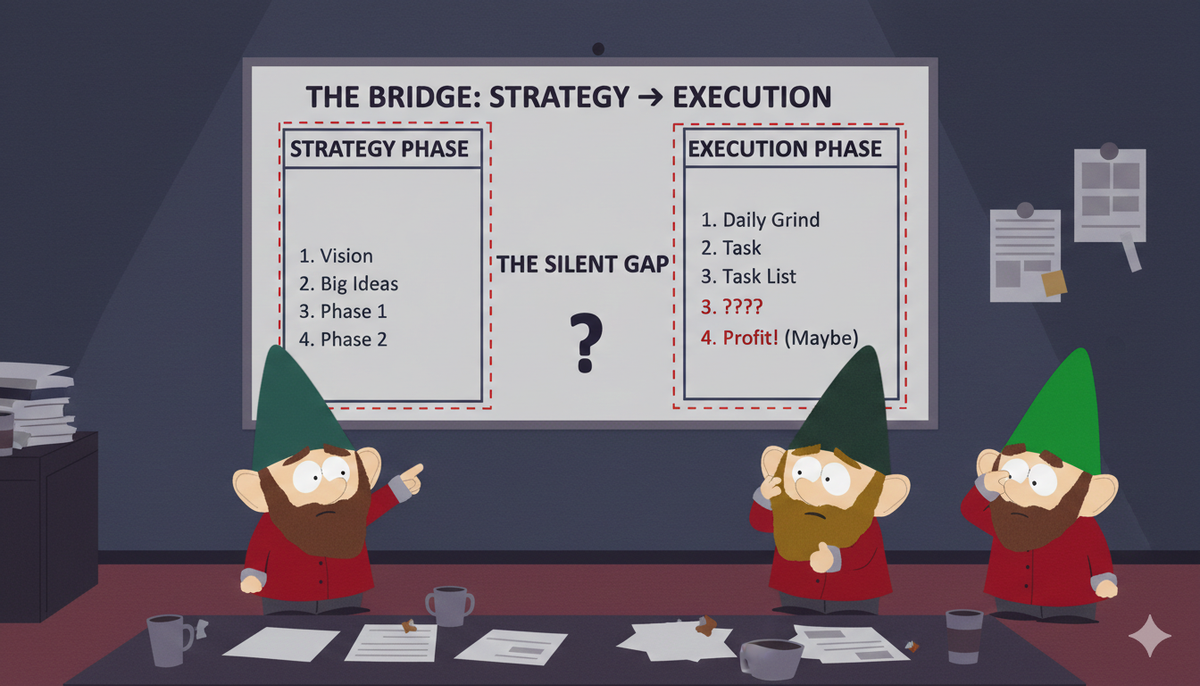
Most companies don’t fail because they chose the wrong strategy. They fail because the strategy never reached the ground.
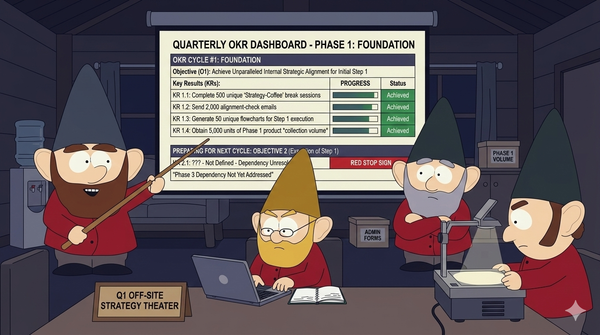
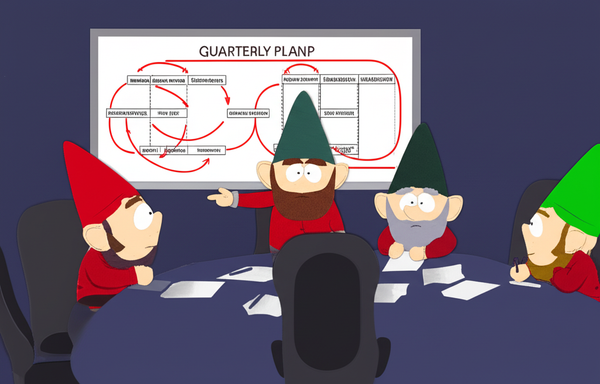
There’s a moment — quiet, invisible, fatal — where the strategic plan stops being real. It happens somewhere between the executive offsite and the team’s daily standup. By the time the strategy reaches the people doing the actual work, it’s been translated, filtered, and diluted into something unrecognizable.
This isn’t a communication problem. It’s a structural gap that exists in almost every organization, and most leaders don’t realize it’s there until the quarter ends and nothing is shipped.
Why Strategy Disappears Between Layers
Strategy gets created at 30,000 feet. Execution happens at sea level. The gap between them is filled with middle management, quarterly planning cycles, and a game of telephone that corrupts the message at every layer.
Here’s how it typically breaks down. The CEO and executive team spend weeks debating market positioning, competitive threats, and resource allocation. They emerge with a clear strategic direction: “We’re going all-in on enterprise customers.”
That strategy gets handed to VPs, who translate it into divisional priorities. “Enterprise” becomes “focus on accounts over $100K ARR.” The Directors take that and turn it into team-level OKRs. “Accounts over $100K” becomes “increase average deal size.” By the time it reaches the IC writing the code or making the sales call, it’s just another metric to hit — with zero context about why it matters or how it connects to the strategy.
At each translation, the “why” gets stripped out. What’s left is a “what” that no one understands deeply enough to make good tradeoff decisions.
What Happens in the Execution Gap
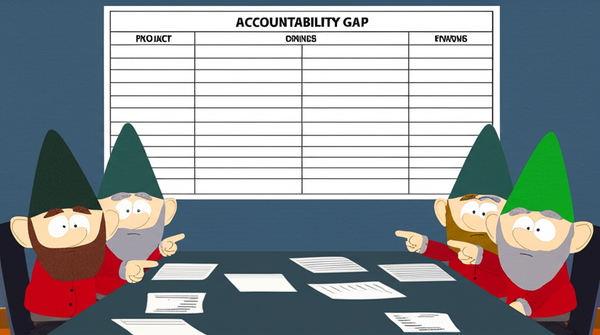
The gap isn’t empty. It’s filled with drift, misalignment, and local optimization, all of which undermine the strategy.
Teams start making reasonable decisions based on incomplete information. Engineering prioritizes technical debt because no one told them the enterprise pivot requires faster security certifications. Sales closes small deals to hit this month’s quota, even though the company's strategy is long-term enterprise growth. Marketing runs campaigns targeting SMBs because that’s what worked last quarter.
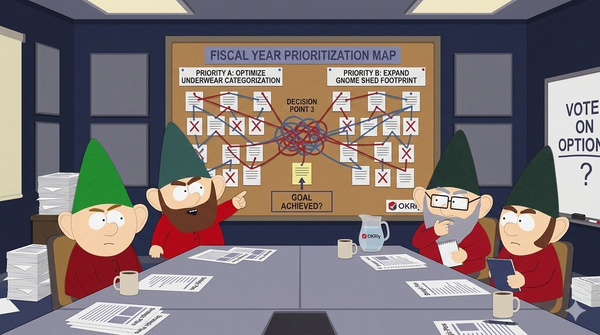
None of these decisions are wrong in isolation. They’re all locally rational. But they’re globally incoherent, because the teams are operating without strategic context. The strategy is up there, somewhere, in a deck that got presented once and then filed away. The execution is down here, in the tickets, emails, and Slack threads where the actual work happens.
The result: a company that’s very busy but not moving toward its strategic goals. Everyone’s executing. No one’s executing the strategy.
Why Traditional Tools Don’t Bridge the Gap
Most companies try to solve this with better planning tools. Quarterly business reviews. OKR software. Strategy docs in Notion. All-hands presentations with the CEO walking through the plan.
These help with documentation. They don’t help with translation.
The problem isn’t that the strategy isn’t written down. It’s that it isn’t operationalized. It lives in a different system from the work. Strategy is in slides. Work is in Jira, Salesforce, Google Docs, and Slack. The two never touch.
So you get this surreal dynamic: leadership thinks the strategy is clear because they’ve communicated it. Teams think they’re executing well because they’re hitting their metrics. But the metrics aren’t connected to the strategy, and the strategy isn’t connected to the daily work.
Six months later, leadership looks at the results and says, “We told everyone to focus on enterprise. Why are 70% of our deals still SMB?” And the sales team says, “We hit our quota. What’s the problem?”
The gap wins again.
How High-Performing Companies Close the Gap
The companies that execute well don’t have better strategies. They have better translation layers.
They build operating systems that connect strategic intent to daily decisions. Every ticket, every meeting, every OKR check-in explicitly ties back to the strategic goal. Not in a superficial “this supports our mission” way — in a concrete “here’s the specific strategic bet we’re making and how this task moves it forward” way.
This requires two things most companies don’t have:
First, the strategic context has to be embedded in the workflow, not referenced in a separate document. When an engineer picks up a ticket, the system should show them which strategic initiative it supports and why that initiative matters. When a salesperson opens a deal, they should determine whether it’s on-strategy or off-strategy before investing time.
Second, there has to be a feedback loop. The gap grows when leadership makes strategic decisions without seeing execution-level signals. The best operating systems surface misalignment in real-time: “Your OKRs say enterprise, but 80% of your pipeline is SMB. Something’s broken.”
This isn’t a technology problem. It’s a system design problem. You need someone or something to act as a constant translator between the strategic and execution layers, keeping the two aligned week by week, not quarter by quarter.
What the Gap Costs You
The cost isn’t just missed targets. It’s wasted capacity.
Every hour spent on work that doesn’t advance the strategy is an hour you can’t get back. Every deal closed that’s off-strategy is a support burden, a retention risk, a distraction from the customers you’re actually trying to serve. Every feature shipped without a strategic context is technical debt you’ll have to unwind later.
The real killer is that this gap erodes trust. When teams execute well on what they think the strategy is, only to be told they missed the mark, they stop believing leadership has a coherent plan. The next time a new strategy is announced, the response is cynical: “Sure, we’ll see how long this one lasts.”
Execution isn’t about working harder. It’s about working on the right things. And you can’t work on the right things if the strategy never makes it from the whiteboard to the work.
Fix Your Execution
The silent gap between strategy and execution is the single biggest operational failure in most growth-stage companies. You can have the best strategy in the world, but if it doesn’t make it to the team level — with full context, in the flow of work — it’s just expensive PowerPoint.
OKRly.ai closes the gap by acting as your AI Chief of Staff. It embeds strategic context directly into your team’s daily workflow, surfaces misalignment in real-time, and ensures every task, every meeting, and every OKR check-in explicitly connects to your strategic goals. Stop losing your strategy in translation. See how at okrly.ai.
FAQ
Why does strategy fail during execution?
Strategy fails because it gets translated through multiple layers, losing context at each step. By the time it reaches front-line teams, only the “what” remains, without the “why.” Teams make locally rational decisions without strategic context, leading to busywork that doesn’t advance company goals.
What is the gap between strategy and execution?
The execution gap is the organizational space where strategy gets diluted as it moves from leadership to front-line teams. It’s filled with translation errors, incomplete information, and misaligned incentives that cause teams to execute on tasks that don’t serve the strategic goals.
How do you bridge the gap between strategy and execution?
Bridge the gap by embedding strategic context directly into daily workflows, not separate documents. Make strategic intent visible at the task level and create real-time feedback loops that surface misalignment before the quarter ends. This requires a translation layer between leadership decisions and team-level work.
Why do teams execute well but still miss strategic goals?
Teams optimize for local metrics without understanding how those metrics connect to strategy. They hit their quotas or ship their features, but work on the wrong customers, wrong products, or wrong priorities because the strategic context never reached them in a usable form.
Want to Learn More?
The gap between strategy and execution isn't loud — it's silent, and it widens every week you ignore it. OKRly.ai makes that gap visible with real-time OKR tracking that shows where strategy and execution are drifting apart.