Why Strategy Reviews Feel Productive but Change Nothing
Quarterly strategy reviews feel productive—until nothing changes. The problem isn't your strategy. It's that reviews are built for discussion, not decisions. Here's why they fail and what actually drives execution.

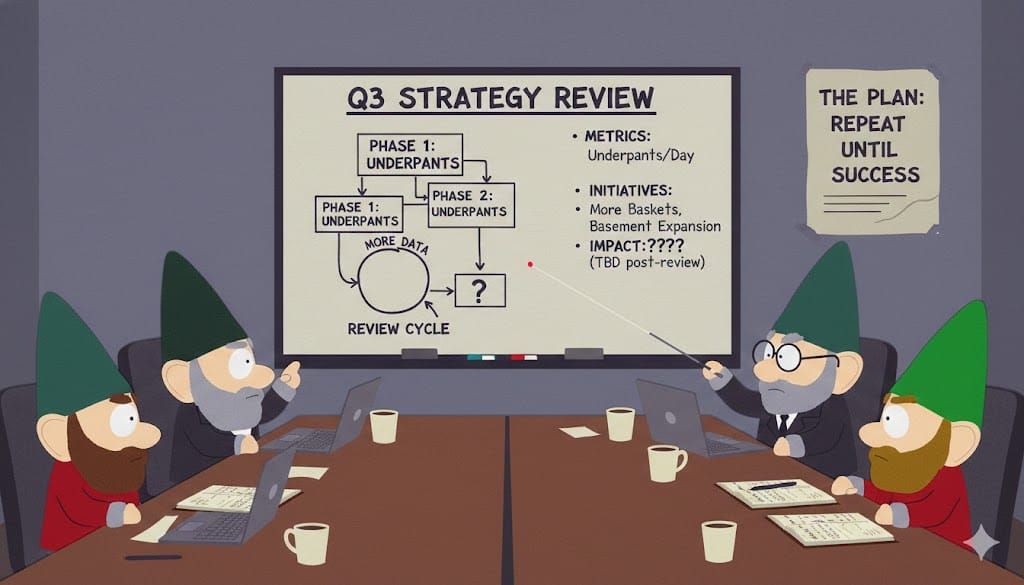
Your quarterly strategy review feels like progress. Everyone showed up prepared. You discussed the big challenges. You all agreed that things need to change. Then everyone goes back to work and... nothing changes. The problem isn't that your team doesn't care. It's that your review process is built to talk about problems, not fix them.
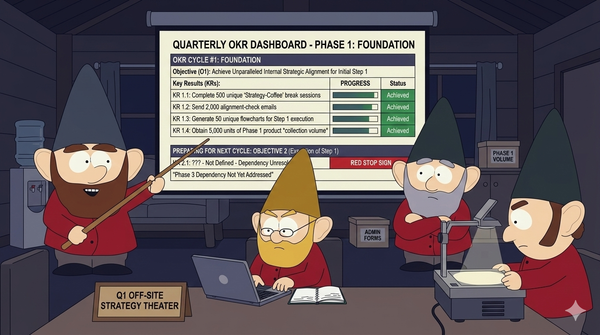
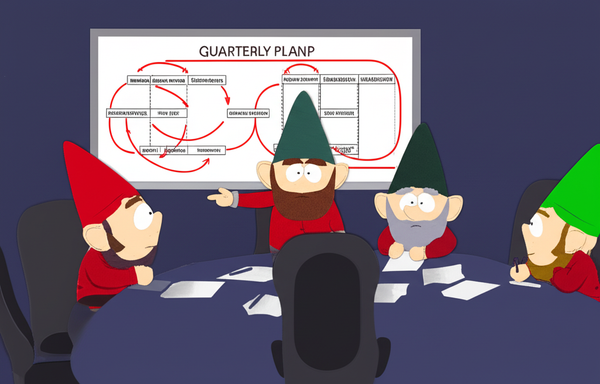
Most strategy reviews follow the same pattern: revisit goals, discuss what's working and what isn't, identify themes, assign a few vague action items, and schedule the next review. It's a cycle designed to create the feeling of strategic thinking without the friction of real decisions.
Strategy Reviews Are Built for Discussion, Not Decisions
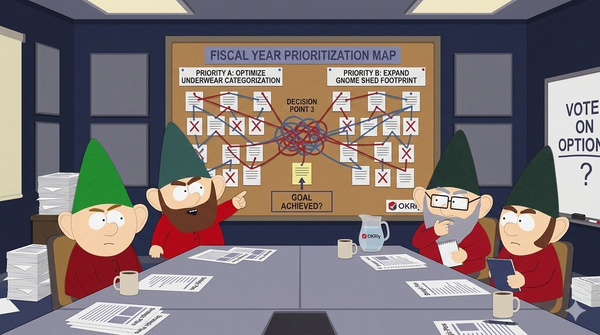
The typical agenda looks professional: review KPIs, discuss market shifts, evaluate team performance, and identify risks. But notice what's missing—concrete decisions about what stops, what starts, and who owns it.
You leave with notes like "explore new customer segments" or "improve cross-team alignment." These sound strategic, but they're not executable. No one has authority, no one has a deadline, and no one will follow up until the next review.
Real execution requires specificity. "Launch pilot in healthcare segment by end of Q2 with Sarah owning vendor selection" is a decision. "Explore healthcare opportunities" is a discussion topic that will resurface in three months, unchanged.
The Review Cycle Reinforces Vague Commitments
Strategy reviews operate on quarterly or annual cycles, which sounds reasonable until you realize that's too slow for actual work. By the time you reconvene, the context has shifted, priorities have evolved, and everyone has a new excuse for why the last set of commitments didn't happen.
The review becomes a ritual of explaining why things didn't get done, not a mechanism for course correction. You're always reviewing the past quarter's failures while planning the next quarter's aspirations. The gap between the two never closes.
Teams that execute well don't wait for quarterly reviews. They run tight weekly or biweekly check-ins where progress is visible, blockers are escalated immediately, and commitments are specific enough to verify. The quarterly review, if it happens at all, is a summary—not the primary execution cadence.
You're Reviewing the Wrong Things
Most strategy reviews focus on outcomes: revenue growth, customer acquisition, and product launches. These are lagging indicators. By the time they show up in a quarterly review, it's too late to fix what caused them.
What you should be reviewing: whether the work that's supposed to drive those outcomes is actually happening. Are the customer discovery calls being scheduled? Is the pricing model being tested? Are the hiring decisions getting made?
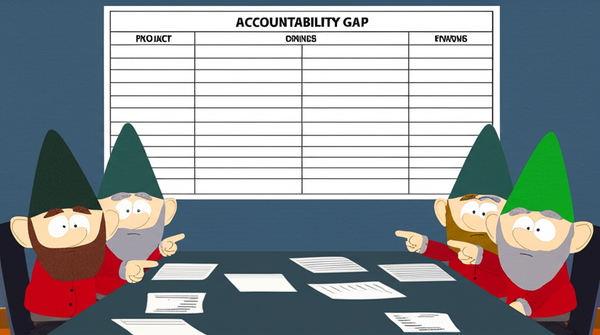
If your strategy review doesn't include a line-by-line audit of what was committed vs. what was delivered, you're just telling a story. You're explaining performance, not managing execution.
The Gap Between "Strategy" and "Doing" Gets Wider Each Quarter
Here's the pattern: leadership sets the strategy, middle management translates it into goals, and individual contributors figure out what it means for their work. Each layer adds interpretation, ambiguity, and delay.
By the time the strategy reaches the people doing the work, it's been filtered through multiple lenses. The result? Teams are working hard on things that feel productive but don't connect to the actual strategic priorities.
Strategy reviews compound this problem because they operate at the wrong altitude. You're talking about "improving customer retention" while your support team is drowning in ticket volume and your product team just shipped a feature no one asked for. The review never connects the dots.
Fix Your Execution
If your strategy reviews feel productive but nothing changes, the problem isn't your strategy—it's your execution system. Strategy reviews can't fix execution. They can only highlight that it's broken.
OKRly.ai doesn't replace your strategy reviews. It replaces the gap between them. Instead of waiting 90 days to realize your commitments went nowhere, OKRly.ai runs weekly check-ins that keep work aligned with goals. It tracks what's actually getting done, flags what's stalling, and makes sure the work happening today connects to the outcomes you want next quarter.
Stop treating quarterly reviews as your execution engine. They're not built for it. Start running a weekly cadence that holds commitments, escalates blockers, and keeps strategy connected to work. That's how you turn plans into outcomes.
FAQs
What makes strategy reviews ineffective?
Strategy reviews focus on discussion rather than decisions, operate on cycles that are too slow for real execution, and review outcomes instead of the work that drives them. They create the appearance of strategic thinking without the specificity needed to drive action.
How often should you review strategic progress?
Effective execution requires weekly or biweekly check-ins, not quarterly reviews. Quarterly reviews should summarize progress, not serve as the primary accountability mechanism. If you're only checking on strategy every 90 days, you're too late to course-correct.
What should a strategy review actually cover?
A useful strategy review audits commitments made vs. work delivered, identifies specific blockers preventing execution, and results in concrete decisions with owners and deadlines. If you're only reviewing outcomes and discussing themes, you're running a reporting meeting, not a strategy review.
Why do strategy reviews fail to drive change?
Strategy reviews fail because they don't connect to the daily work that drives outcomes. The gap between quarterly strategy discussions and weekly execution is where commitments die. Without a tight weekly cadence that holds teams accountable, strategy reviews become storytelling sessions instead of execution checkpoints.
FAQ
How often should you run strategy reviews?
Quarterly is the right cadence for most organizations. Monthly is too frequent — strategy shouldn't change that fast. Annually is too infrequent — you need to validate assumptions before they compound into costly mistakes. The review should ask two questions: Is the strategy still right given what we've learned? And is execution tracking to the strategy?
Who should attend a strategy review?
The people who can make decisions and the people who have execution data. That's usually the leadership team plus 2-3 operational leads who can speak to what's actually happening on the ground. Skip the extended audience — large meetings diffuse accountability and encourage performance over honesty.
What's the most common mistake in strategy reviews?
Spending all the time on presentations and none on decisions. A good strategy review should be 20% information sharing and 80% discussion and decision-making. If you're spending more than 15 minutes on slides in a 60-minute review, you're doing theater, not strategy. Send the slides in advance and use the meeting time for the hard conversations.
Want to Learn More?
Strategy reviews should change things, not just review them. OKRly.ai gives you real-time OKR data so your reviews start with facts instead of slides — and end with decisions instead of action items that nobody follows up on.