When Priorities Collide: How to Make the Call
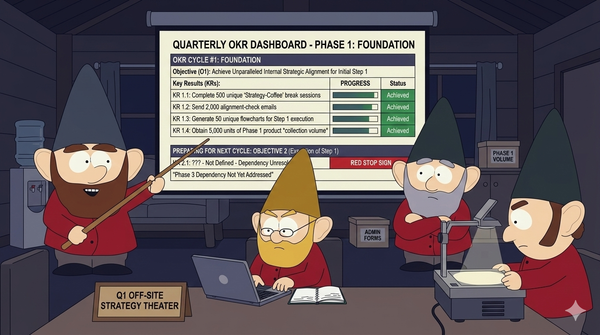
Two priorities compete for the same engineers, the same sprint, the same quarter. Both matter. Both have executive sponsors. And your team is stuck, waiting for someone to make a call that never comes.

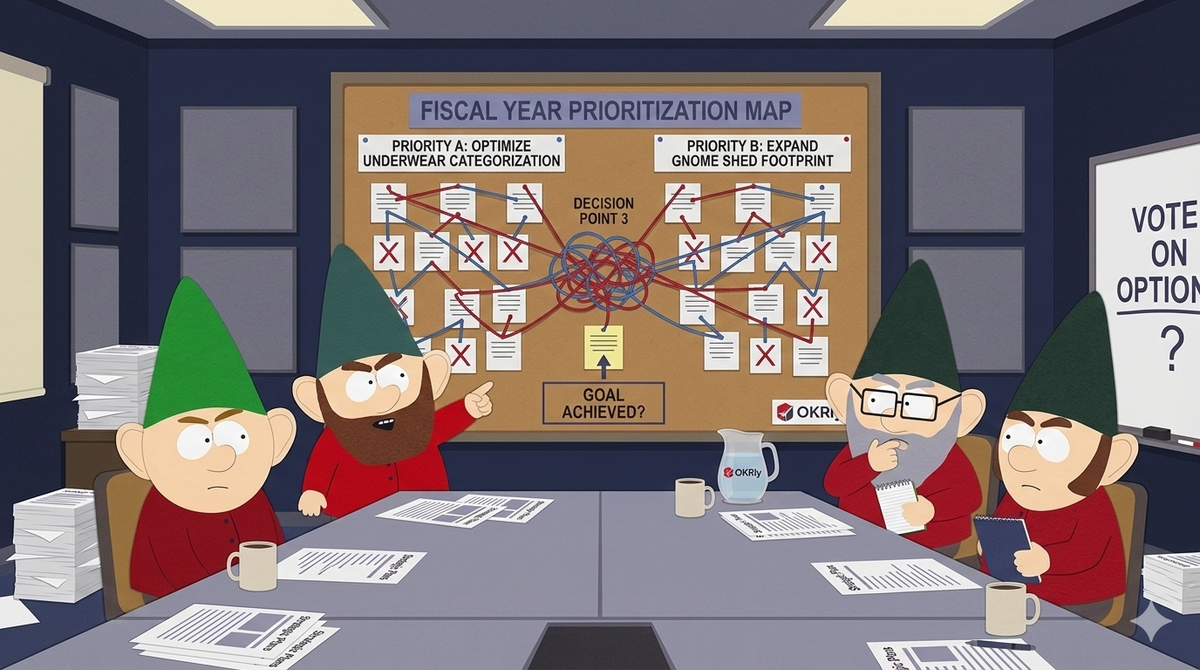
Your team has two critical priorities this quarter. Both are important. Both have executive support. Both need the same three engineers. And for the past two weeks, nobody has made the call on which one comes first. So your team is doing both badly, waiting for clarity that isn't coming.
The Myth of Equal Priority
When someone says "Both are top priority," what they're really saying is "I don't want to choose." It sounds reasonable. It feels diplomatic. It's also operationally useless. Two things cannot simultaneously be the most important thing. The moment they compete for the same resource — a person, a sprint, a budget line — one of them wins and one of them waits. The only question is whether that decision happens deliberately or by default.
Default decisions are the worst kind. They happen when the engineer makes the call based on which Slack message felt more urgent, or which stakeholder was louder in the last meeting, or which project has a more imminent deadline regardless of strategic importance. These are reasonable heuristics for individuals, but they're terrible strategy.
The result is predictable: both priorities get worked on, neither gets the team's full attention, and at the end of the quarter both are behind schedule. Then someone says "We should have focused." They're right. They should have said that in January.
Why Organizations Avoid Making the Call
Choosing between two important priorities is politically expensive. Someone will be disappointed. Someone's project gets deprioritized. Someone's team gets fewer resources. In organizations where consensus is valued over clarity, that cost feels too high. So the decision gets deferred, delegated, or dissolved into "we'll do both."
There's also a cognitive bias at play: the illusion of parallel work. Leaders imagine that two priorities can be worked on simultaneously with only a small efficiency loss. In reality, the loss is enormous. Context switching, coordination overhead, and resource contention mean that two parallel priorities often take longer than doing them sequentially. You don't save time by running both — you lose it.
The deeper problem is that many organizations lack a decision-making framework for this exact situation. When two priorities collide, who decides? The loudest VP? The one who escalates to the CEO first? The person who was in the room when the decision came up? Without a clear framework, priority collisions become political contests instead of strategic decisions.
A Framework for Breaking the Tie
When two priorities compete, run them through three filters in order. The first filter that produces a clear winner resolves the decision.
Filter 1: Irreversibility. Which priority has a time-sensitive constraint that can't be recovered? A contract deadline, a market window, a regulatory requirement. If one priority has a hard external deadline and the other is internally driven, the external deadline wins. Internal timelines can be adjusted. External ones often can't.
Filter 2: Strategic leverage. Which priority, if completed, makes other things easier or possible? A platform investment that unblocks three future initiatives has more leverage than a single feature. The priority that creates future options should generally win over the one that captures immediate value, unless the immediate value is very large.
Filter 3: Cost of delay. What is the concrete cost of delaying each priority by one quarter? Not the emotional cost — the measurable cost. Lost revenue, lost customers, increased technical debt, competitive disadvantage. Quantify it as specifically as you can. The priority with the higher cost of delay goes first.
If all three filters produce a tie, you have a genuinely equal choice. Pick one, commit fully, and move on. The cost of indecision always exceeds the cost of a slightly suboptimal choice.
Run This Before Your Next Planning Collision
Think of the last time two priorities competed for the same resources on your team. How was it resolved? If the answer is "we tried to do both" or "it escalated until someone senior made the call three weeks later," you need a better process.
Write down your team's top three priorities for this quarter. Now force-rank them. Not tier them — rank them. Number one, number two, number three. If priority two and priority three compete for the same resource next week, number two wins automatically. No meeting needed. No escalation. No two-week deliberation.
Share this ranked list with your team and your stakeholders. The conversation will be uncomfortable. That's the point. The discomfort of ranking priorities in January prevents the chaos of competing priorities in March. And if leadership pushes back with "they're all equally important," ask: "If we can only finish two of these three this quarter, which two?" That question forces the rank whether they want to rank or not.
FAQ
What if leadership refuses to prioritize?
Then you prioritize by default — and make the defaults visible. Show leadership what the team is actually spending time on, and ask them to confirm that allocation reflects their intent. Often, seeing where time actually goes triggers the prioritization conversation that abstract debates couldn't. If they still refuse, document the priority collision and the team's chosen resolution so there's a clear record when the consequences arrive.
How do you handle urgent requests that override planned priorities?
Treat urgency as a trade-off, not an override. When something urgent arrives, name what it displaces: "We can handle this escalation, but it means Feature X slips a week. Are we okay with that?" This prevents urgency from silently consuming planned capacity and makes the cost of interruption visible to the person requesting it.
Can a team have more than one top priority?
You can have multiple priorities, but they must be ranked. "Priority" literally means "the thing that comes first." You can have a first priority, a second priority, and a third. What you can't have is three things that are all number one. The moment resources are constrained — and they always are — the ranking determines where attention goes. Without a ranking, attention goes wherever the loudest voice directs it.
Want to Learn More?
Priority collisions are inevitable. Indecision isn't. OKRly.ai helps you stack-rank objectives, track progress against what's actually first, and make trade-off decisions visible to the whole team before they become quarter-ending fires.