Why “Clarity” Is Rarely the Actual Problem
Most companies don't have a clarity problem—they have an execution gap. Learn why more communication won't fix your misaligned team and how to build systems that prioritize trade-offs, accountability, and operational rigor over generic "clarity."

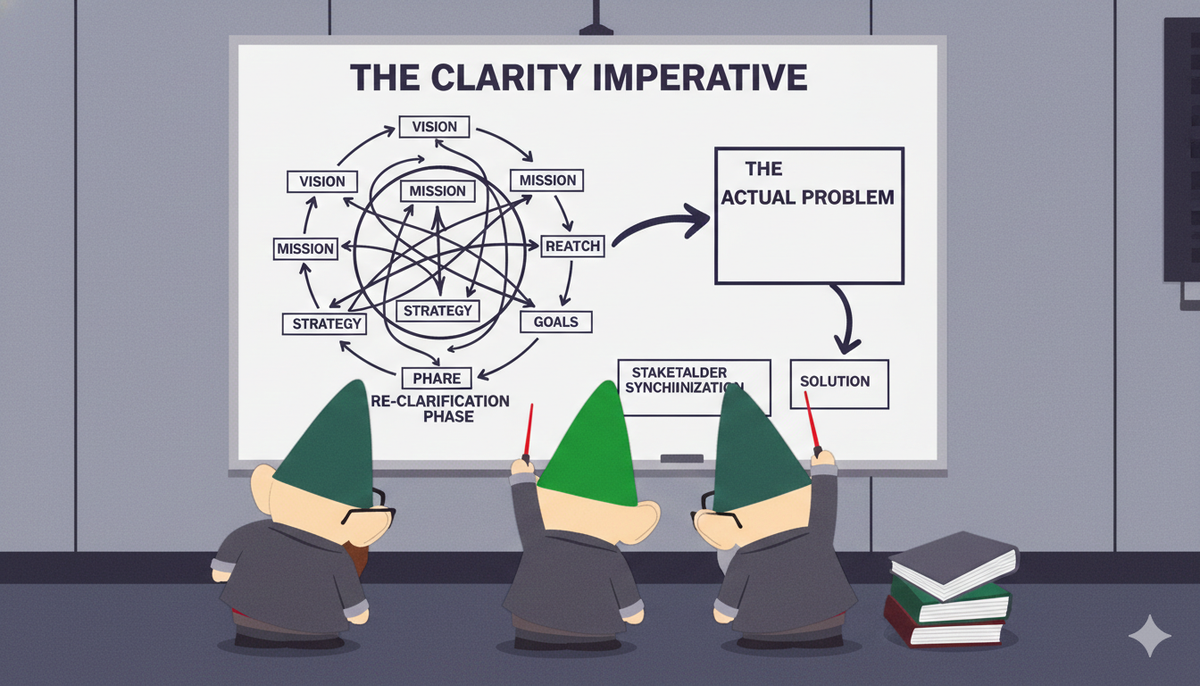
When a leadership team feels stuck, the first diagnosis is almost always "a lack of clarity."
The CEO assumes the managers don't understand the vision. The managers assume the ICs don't understand the priorities. The solution is usually more meetings, longer All-Hands decks, and "clarifying" emails that go unread.
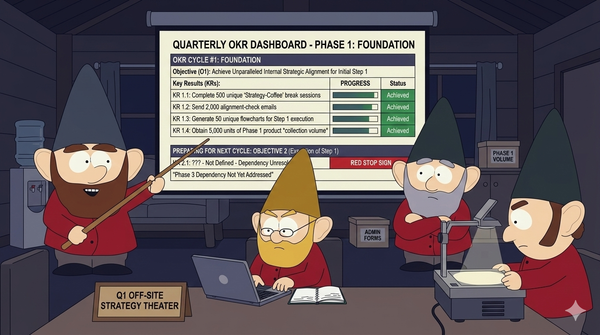
But if you are an operator, you know the truth: you can have perfect clarity and still have zero momentum.
In high-growth companies, clarity is rarely the bottleneck. The real problems are usually structural, emotional, or systemic. Leaders use "clarity" as a polite euphemism for "we are failing to execute."
Here is why clarity isn't your problem—and what to fix instead.
The Clarity Paradox
Most companies suffer from an abundance of clarity and a deficit of consequence.
Everyone knows the goal is to "Increase Revenue by 20%" or "Launch Product X." The clarity is there. What is missing is the bridge between that high-level desire and the Monday morning to-do list.
When a COO says, "We need more clarity," what they usually mean is:
- We haven't decided what we are not doing.
- We haven't assigned a single throat to choke for this metric.
- We haven't built a cadence to track progress.
Clarity without a system is just a hallucination.
1. The Fear of Trade-offs
The most common cause of "lack of clarity" is actually a lack of courage.
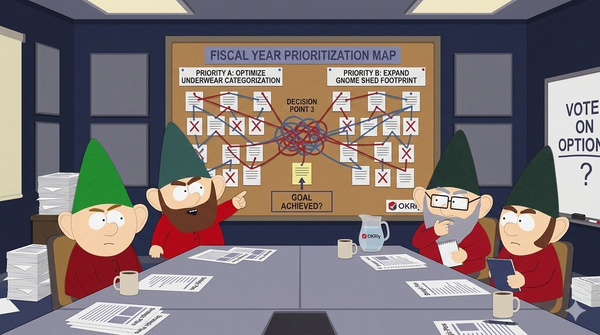
True clarity requires saying no to good ideas. Most leadership teams want to do five things, but they only have the capacity for two. Instead of choosing, they list all five as "Top Priorities."
When the team gets confused about what to focus on, the leaders call it a communication issue. It isn’t. It’s a strategy issue. Strategy is the art of sacrifice. If you haven't made anyone angry by deprioritizing their pet project, you haven't provided clarity; you’ve just provided a wish list.
Failure Mode: The "And" Strategy
Companies fail when they use the word "and" too much. "We will scale the sales team and rebuild the core infrastructure and enter the EMEA market."
This creates a cognitive load that no amount of "clarifying" can solve. The team isn't confused; they are overwhelmed by the mandate's impossibility.
2. The Feedback Loop is Broken
You can explain a goal 100 times, but if there is no mechanism to verify whether it is being met, the team will drift.
Operators often mistake a "lack of clarity" for a "lack of visibility." If a team doesn't have a weekly dashboard or a Friday check-in, they naturally revert to the path of least resistance. This isn't because they don't know the goal; it's because the goal doesn't feel real without a heartbeat.
A healthy operating cadence creates clarity through repetition. When a metric is red three weeks in a row, the "clarity" on what needs to happen next emerges naturally from the data, not from a memo.
3. Accountability is Diffusion-Proof
If three people are responsible for a Key Result, then no one is.
"Lack of clarity" is often used to mask discomfort with individual accountability. When a project stalls, it’s easier to say "the instructions weren't clear" than to say "I failed to hit my target."
Operators must move from collective responsibility to individual ownership. Every OKR needs one owner. Not a department, not a committee—a human being. Clarity follows ownership, not the other way around.
How to Move Beyond Clarity to Execution
If you suspect your "clarity" problem is actually an execution problem, stop talking and start building.
Establish a Non-Negotiable Cadence
The weekly check-in is the most important meeting in any company. It is the only place where strategy meets reality.
- The Rule: If it isn't in the check-in, it doesn't exist.
- The Rigor: Do not accept "we're working on it." Ask for the delta. What changed since last week?
Audit Your "Top 3"
Ask every department head to list their top three priorities. If they list four, they have zero. If their list doesn't match your list, you don't have a clarity problem—you have an alignment gap. Alignment is solved through direct, often uncomfortable, 1-on-1 conversations about trade-offs.
Use AI to Bridge the Context Gap
The biggest barrier to clarity is the "Context Tax." It takes energy for a human to constantly remind everyone of the goals. This is where modern operators use tools like OKRly.ai to handle status updates, reminders, and to automate the "clarity" part of the job.
If an AI Chief of Staff handles status updates, reminders, and data aggregation, the human leaders can focus on the hard part: making decisions.
When Clarity is Actually the Problem (The Exception)
There is one scenario where clarity is the root cause: when the leadership team hasn't defined the "Why."
If the team understands what to do but doesn't understand why it matters, they will execute with 50% effort. This isn't an execution gap; it's an inspiration gap. But for 90% of mid-market and enterprise companies, the "why" is clear enough. The "how" is where they die.
FAQs
How do I know if my problem is clarity or execution?
Check your calendars. If you are spending more than 20% of your time "re-explaining" the strategy, but your dashboards haven't moved in a month, you have an execution problem. Clarity is about understanding; execution is about movement.
Does more documentation help clarity?
Rarely. Long-form strategy docs often provide a false sense of security. Operators should prefer a single page of OKRs with clearly defined owners and metrics over a 50-page strategy deck.
What is the fastest way to align a team?
The "Red-Yellow-Green" status update. Force owners to label their progress. The moment someone has to label their work as "Red" (At Risk), clarity arrives instantly.
Why do OKRs fail even when they are clear?
They fail because they are treated as a "set and forget" exercise. Clarity has a half-life. Without a weekly operating system to reinforce the goals, even the clearest OKRs will be forgotten by week four of the quarter.
The next time a manager tells you they need "more clarity," don't write a longer email. Look at their workload, their metrics, and their accountability. You’ll likely find that they have plenty of clarity—they just don't have a path to success.
Stop trying to be more "clear" and start being more rigorous.
The easiest way to maintain rigor without adding to your own workload is to let technology handle the follow-ups. OKRlysystemic acts as your AI Chief of Staff, ensuring that your team stays aligned on the "clear" goals you've already set.
FAQ
If clarity isn't the problem, what usually is?
Courage. Most teams understand what needs to happen — they lack the organizational courage to make the trade-offs, have the difficult conversations, or challenge the comfortable plan. Calling it a "clarity problem" is safer than calling it a "we won't make hard decisions" problem. But misdiagnosing the problem guarantees you'll solve the wrong thing.
How do you tell the difference between a clarity problem and a commitment problem?
Ask the team to write down what they think the top priority is. If everyone writes different things, you have a clarity problem. If everyone writes the same thing but nothing is progressing, you have a commitment problem. The fix for each is completely different — one needs communication, the other needs resource reallocation and hard choices.
When is clarity actually the real problem?
When the organization is new, when strategy has recently changed, or when teams have been reorganized. In those moments, genuine ambiguity exists and clarity work is valuable. But if your company has been operating for years with a stable strategy and teams still claim they lack clarity, the problem is almost certainly something else wearing a clarity mask.
Want to Learn More?
Stop chasing clarity and start making commitments. OKRly.ai turns strategic intent into measurable OKRs with clear owners, so the real blockers — courage, commitment, capacity — become visible instead of hiding behind "we need more clarity."