Why Teams Need Direction More Than Inspiration
Inspiration moves people emotionally. Direction tells them where to move. When teams stall, the fix usually isn't a better speech—it's clearer priorities.

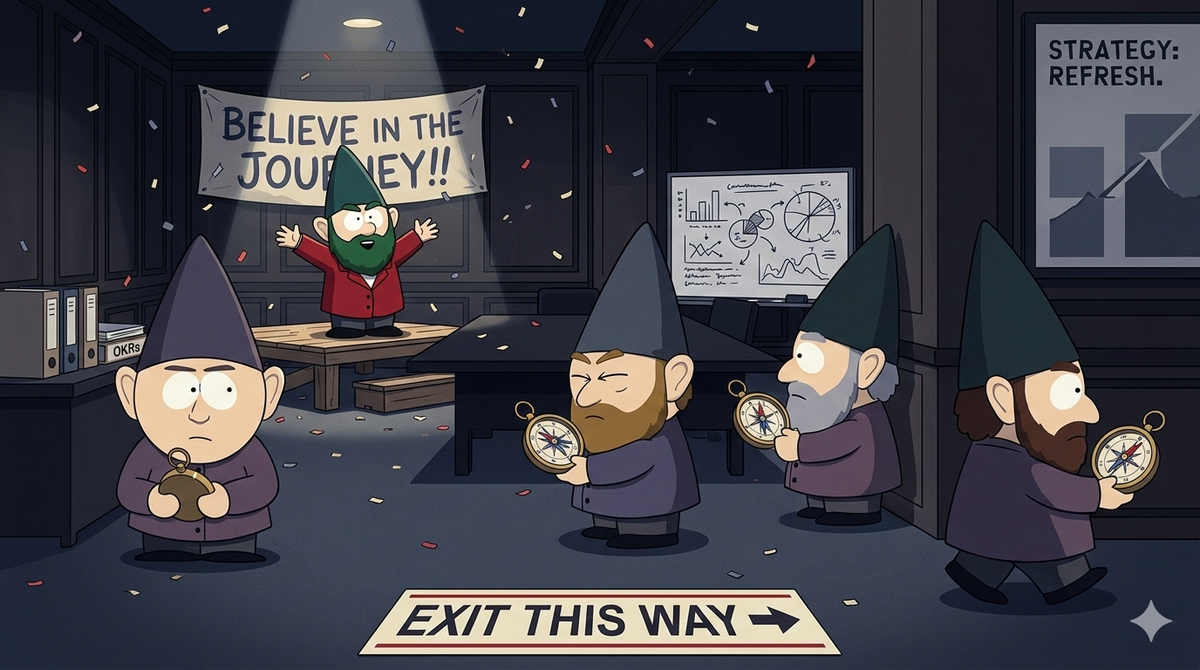
There's a management instinct that says: if your team isn't performing, they need a better speech. A clearer vision. A more compelling "why." So leaders invest in all-hands presentations, mission workshops, and motivational frameworks—and wonder why execution still falls short.
The problem isn't a lack of inspiration. It's a lack of direction.
Inspiration Without Direction Is Just Noise
Inspiration moves people emotionally. Direction tells them where to move. Both have a role, but they aren't interchangeable—and confusing them is one of the most common leadership mistakes.
When a team is stuck, the usual culprit isn't low morale or poor attitude. It's ambiguity. People don't know which work matters most, how to make decisions when priorities conflict, or what "done" actually looks like. Inspiration doesn't solve any of that. Direction does.
Direction means: here's where we're going, here's what we're doing first, here's how we'll know it worked. It's concrete, actionable, and specific. Inspiration might help people feel good about the journey—but it won't tell them which road to take.
The Motivation Trap
Leaders who over-index on inspiration often do so because it feels safer. Telling your team "we're going to change how this industry works" is exciting and unverifiable. Telling them "we're prioritizing enterprise accounts over SMB for the next two quarters" is specific and contestable.
Specific direction opens you up to questions, disagreements, and accountability. That discomfort leads some leaders to default to the inspirational register—where everything sounds important and nothing is committal.
The team picks up on this. When leadership speaks only in vision and values, people learn to nod along without internalizing it as operational guidance. They keep doing what they were already doing, waiting for someone to tell them what actually needs to change.
What Direction Actually Looks Like
Good direction isn't a detailed project plan. It's a clear answer to three questions every team member should be able to answer:
- What are we focused on right now? Not in the abstract, but concretely—which work takes priority when time is limited.
- What are we not doing? Direction is as much about constraints as goals. If the team doesn't know what to deprioritize, they'll try to do everything and make progress on nothing.
- How will we know if it's working? A goal without a measure is a wish. Teams need to know what success looks like so they can course-correct without waiting for a quarterly review.
When leadership can answer these questions clearly, teams can work with autonomy. When they can't, people either over-ask (waiting for permission on every decision) or under-ask (making assumptions that diverge from strategic intent).
Inspiration Is a Reward, Not a Catalyst
There's a place for inspiration in leadership—but it works best as a reward for progress, not a substitute for it. When a team hits a milestone, a well-timed reminder of why the work matters can sustain momentum. When a team is confused about what to do next, the same speech lands hollow.
The sequence matters. Direction first. Execution second. Inspiration as fuel along the way.
Teams that feel genuinely inspired are usually teams that understand what they're doing and why it matters—because someone gave them both direction and context. The inspiration follows from clarity, not the other way around.
A Test for Your Own Leadership
Ask a few team members, without warning: "What's the single most important thing we need to accomplish this quarter?" If the answers are consistent and specific, you have direction. If they vary widely or default to platitudes, you have inspiration without direction.
The gap between those answers is the gap between how you think you're leading and how it's actually landing.
Closing that gap doesn't require a new vision statement or a better all-hands deck. It requires making explicit decisions about focus, trade-offs, and success criteria—and communicating them clearly enough that a new hire could understand the priorities without needing to read your mind.
That's not less inspiring than a great speech. Over time, it's more inspiring—because your team will be doing work that actually moves the needle, and they'll know it.
FAQ
Isn't inspiration important too?
Absolutely — but it plays a supporting role, not a leading one. Inspiration sustains momentum and reinforces commitment once people understand what they're working toward. The problem arises when leaders use inspiration as a substitute for direction, treating a compelling vision as if it were operational guidance. Teams that receive both — clear direction first, with inspiration woven in as context — consistently outperform teams that get one without the other.
What if my team seems demotivated even with clear direction?
Clear direction is necessary but not sufficient. If direction is present but morale is low, the problem is usually one of three things: the direction feels arbitrary or disconnected from anything meaningful, people don't believe the goal is achievable with available resources, or there's a trust issue between team and leadership that no amount of clarity will resolve on its own. Direction gives people somewhere to go — but they still need to believe the journey is worth taking.
How often should direction be reset?
As rarely as possible, and only when the environment has genuinely changed. One of the most common — and costly — leadership mistakes is resetting direction so frequently that teams stop internalizing it. When people expect the priorities to shift, they hedge their bets and spread their effort across everything rather than committing to what matters now. A good rule: direction should be stable enough that a team member returning from two weeks of leave finds it unchanged.
Want to learn more?
Direction doesn't require a perfect plan — it requires clarity about what matters now and the discipline to communicate it consistently. OKRly.ai helps leadership teams translate strategy into focused priorities so that every team member knows what to work on, what to deprioritize, and how to measure whether it's working.