How Leadership Avoids Hard Tradeoffs
Leaders say they prioritize, but most just approve everything and call it ambitious. Real strategy means killing good ideas to resource great ones.

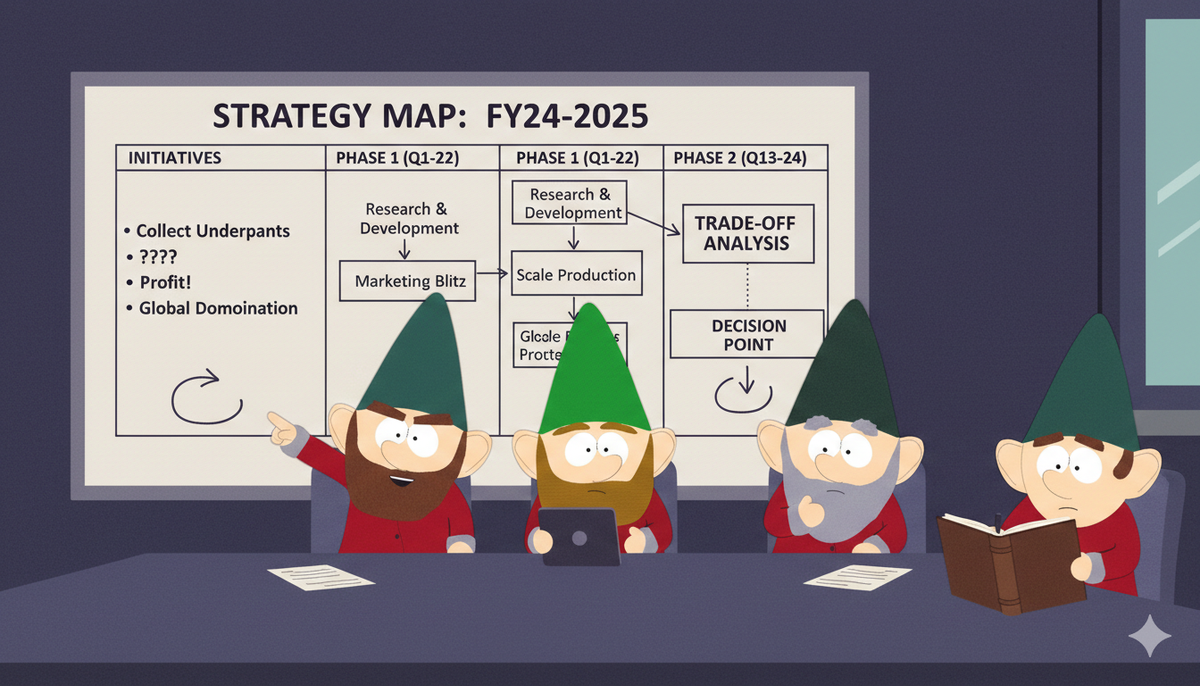
Every leadership team says they prioritize. Almost none of them actually do.
Prioritization means choosing what not to do. It means looking at a table of competent people with reasonable requests and telling some of them no. Not “not yet.” Not “let’s revisit next quarter.” No.
Most leaders can’t do this. So instead, they do something worse: they say yes to everything and call it “ambitious.”
Why Leadership Teams Say Yes to Everything
Here’s how it usually works. The leadership team meets for quarterly planning. Five teams present five initiatives. Each one is defensible. Each one has a business case. So the leadership team approves all five.
No one asks the obvious question: do we have the capacity to execute five things well, or are we signing up for five things done poorly?
The answer is almost always the latter. But approving everything feels like leadership. It feels decisive. Saying “we’re going after all of it” sounds bold in the room. The cost doesn’t show up until eight weeks later, when every team is at 60% capacity on everything and 100% on nothing.
This is not ambition. It’s avoidance.
Why Do Leaders Avoid Making Hard Tradeoffs?
Leaders avoid tradeoffs because choosing means accepting loss. If you pick initiative A over initiative B, you’re accepting that the potential upside of B won’t happen. That feels like a mistake, especially when B has a strong champion in the room.
There’s also a political dimension. Saying no to a VP’s initiative is a signal. It says “your area is less important.” In organizations where internal politics drive decisions, leaders would rather overload everyone than have that conversation.
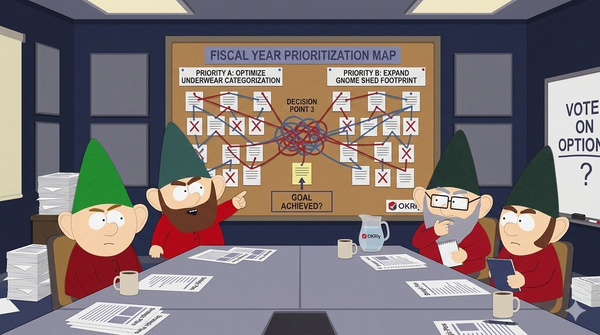
The result is a company where the stated strategy has twelve priorities. Twelve priorities is zero priorities. The teams at the edges — the people actually doing the work — look at the list and make their own tradeoffs anyway, because they have to. Except now those tradeoffs are being made by individual contributors with no strategic context, instead of by leaders with the full picture.
You haven’t avoided the tradeoff. You’ve just delegated it to the worst possible decision-maker.
What Are Phantom Priorities and Why Do They Kill Execution?
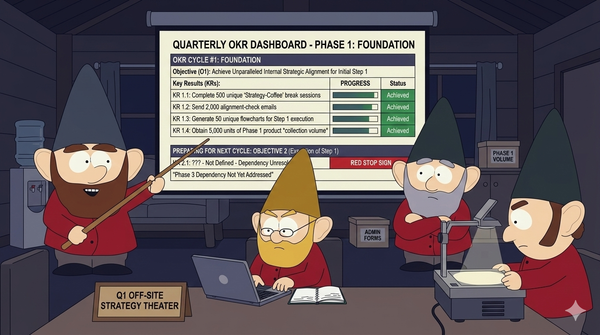
The most dangerous version of this problem is the Phantom Priority. This is the initiative that leadership never officially approved but also never killed.
Someone mentioned it in a meeting. A director started exploring it. A small team spun up a prototype. It was never in the OKRs, never resourced, never debated. But it’s consuming real hours from real people.
Phantom priorities thrive in organizations that avoid tradeoffs because there’s no mechanism to say “stop.” If leadership won’t explicitly choose what matters, there’s no basis for killing what doesn’t. Everything is implicitly approved because nothing was explicitly rejected.
If you audit where your engineering hours actually go versus where your OKRs say they should go, the gap is your phantom priority tax. In most mid-stage companies, it’s 20–30% of total capacity. That’s not a rounding error. That’s a missing team.
How to Force Real Prioritization in Your Leadership Team
The fix isn’t a framework. It’s a behavior change.
One approach that works: stack-rank everything. Not tiers, not “high/medium/low.” A single ordered list. Initiative 1 is more important than initiative 2, which is more important than initiative 3. If you can’t rank them, you don’t understand them well enough.
Then draw a line. Everything above the line gets full resources. Everything below the line gets nothing. Not reduced resources. Nothing. The line is set by actual capacity, not by optimism.
This is painful. The first time a leadership team does this, it takes hours of debate. Good. That debate is the actual work of strategy. The previous approach — approving everything in 30 minutes — wasn’t efficiency. It was avoidance wearing a mask.
The second behavior: kill things publicly. When you decide to stop an initiative, announce it. Explain why. “We’re stopping X because Y is more important and we can’t do both well.” This gives the organization permission to focus. It also builds trust, because people can see that leadership is making real choices rather than hiding behind vague language.
What Happens When a Company Has Too Many Priorities?
The true cost of avoiding tradeoffs isn’t the wasted resources. It’s the erosion of trust.
When teams see leadership approve ten initiatives and resource three, they stop believing the plan. The next time leadership announces a “top priority,” the response is quiet cynicism: “Sure, along with the other nine top priorities.”
Once that trust erodes, even good strategy fails. You could hand these teams the perfect plan and they’d hedge their bets, keep side projects alive, and sandbag their estimates. Because experience taught them that leadership’s stated priorities are meaningless.
Rebuilding that trust requires a track record of hard choices. You have to prove, over multiple quarters, that when you say something is the priority, you actually mean it — and you killed the other things to make room.
Fix Your Execution
Strategy without tradeoffs is just a wish list. The organizations that execute well are the ones where leadership forces the hard conversations, draws the line, and operates against a focused set of commitments rather than an aspirational list of everything that would be nice to have.
OKRly.ai acts as your AI Chief of Staff, ensuring every team is operating against the same focused priorities — and surfacing when phantom priorities or capacity mismatches start dragging you off course. Stop managing wish lists and start making real tradeoffs. See how at okrly.ai.
FAQ
Why do leaders avoid making hard tradeoffs?
Because choosing means accepting loss. Saying no to an initiative signals that someone’s work is less important, which feels politically dangerous. It’s easier to approve everything and let capacity constraints force the tradeoff invisibly — even though that produces worse outcomes.
What happens when a company has too many priorities?
Teams at the front lines make their own tradeoffs without strategic context. Resources get spread thin across too many initiatives, resulting in nothing done well. Trust in leadership erodes because stated priorities stop meaning anything.
How many priorities should a company have at one time?
Most high-performing companies operate with three to five company-level priorities per quarter. The exact number depends on your capacity, but the test is simple: if you can’t resource each priority with a dedicated team working at full capacity, you have too many.
How do you force real prioritization in a leadership team?
Stack-rank all initiatives into a single ordered list, then draw a capacity line. Everything above the line gets full resources. Everything below gets zero. Kill deprioritized work publicly and explain why. The discomfort of that conversation is the actual work of strategy.
Want to Learn More?
Hard tradeoffs don't go away because you avoided them — they compound. OKRly.ai makes your commitments visible and your capacity honest, so leadership can make real choices instead of comfortable ones.