The Accountability Gap: Why Ownership Breaks Down in Execution
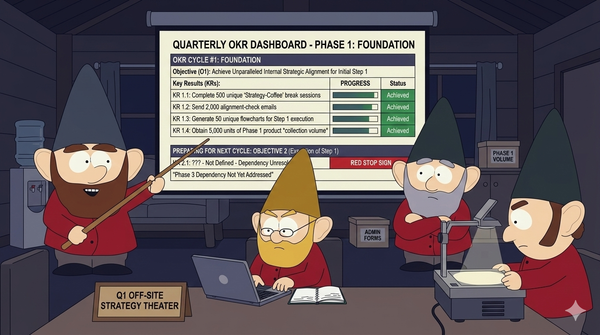
Your OKR has an owner. Technically. In practice, ownership is split across teams, blurred by matrix structures, and diluted by shared responsibility. When everyone owns it, nobody does.

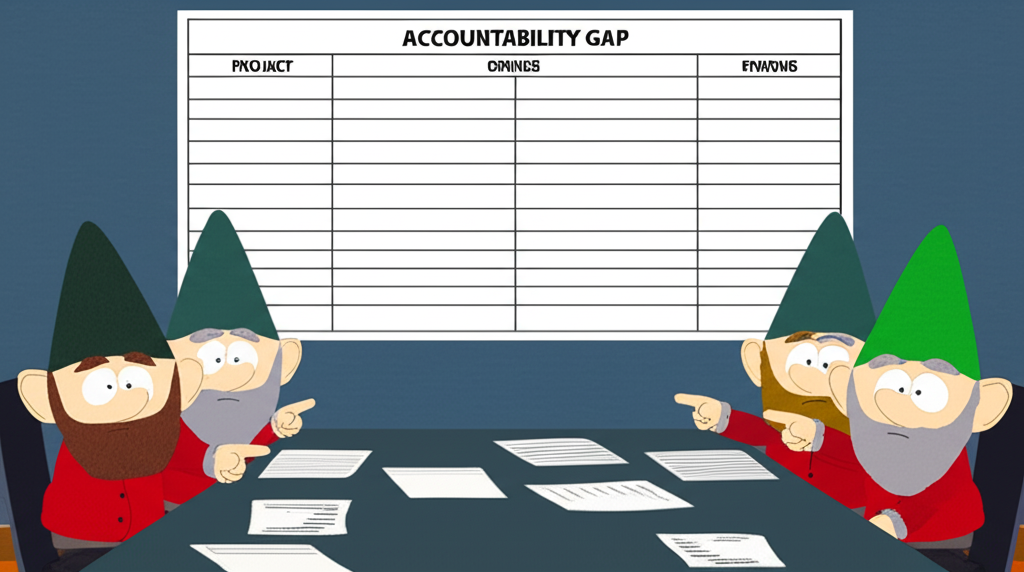
Every OKR framework says the same thing: assign a clear owner. Every company nods along and writes a name next to each key result. And every quarter, the same key results stall because the "owner" didn't have the authority, time, or cross-functional support to move the needle. The name was there. The ownership wasn't.
The Ownership Illusion
Ownership in most organizations is performative. You assign a name to a key result in the OKR spreadsheet. That person didn't volunteer — they were nominated, usually by someone more senior. They accept because declining feels like a career risk. But they don't control the resources, the dependencies, or the timeline. They're an owner in name only.
The dysfunction multiplies with shared ownership. "Marketing and Product co-own this key result." In practice, co-ownership means each team assumes the other is handling the hard parts. When the key result slips, both teams have plausible deniability. Marketing thought Product was building the feature. Product thought Marketing was driving the launch. The gap between them is where accountability goes to die.
The most revealing moment in any quarterly review is when a missed key result is discussed, and no single person can explain exactly what happened and what they would do differently. If the post-mortem sounds like a group shrug, you have an accountability gap.
Why Accountability Breaks Down in Practice
Three structural problems undermine ownership even when people genuinely want to be accountable.
First, authority doesn't match responsibility. You can't hold someone accountable for a result they can't influence. If a product manager "owns" a conversion metric but can't prioritize engineering work, doesn't control the ad budget, and can't change pricing, they own a number on a dashboard — not the outcome. Real ownership requires the authority to make decisions and allocate resources toward the result.
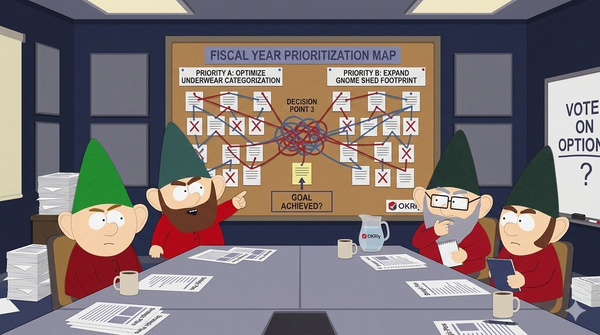
Second, dependencies aren't mapped. Most key results require contributions from multiple teams. But the dependencies aren't explicit at planning time. The owner discovers mid-quarter that they need design resources that were already committed elsewhere, or that the API they depend on won't be ready until week 10 of a 12-week quarter. By then, it's too late.
Third, check-ins are status updates, not accountability conversations. The weekly sync asks "What's the status?" not "What are you blocked on and what decision do you need?" Status updates let people report activity without surfacing the problems that actually threaten the key result. Accountability requires asking uncomfortable questions early, not comfortable questions late.
Making Ownership Real
Real ownership has three requirements: a single person (not a team, not a committee), the authority to make decisions about how the work gets done, and explicit agreements from every team whose contribution is needed.
Start by assigning one human to every key result. Not a team. Not a department. A person with a name. This person isn't doing all the work — they're responsible for the outcome. They coordinate, they escalate, they make the calls when trade-offs arise. If the key result fails, they should be able to explain what happened and what they'd change.
Before the quarter starts, have every key result owner identify their top two dependencies. For each dependency, get an explicit commitment from the other team: what they'll deliver, by when, and who specifically is responsible on their end. Write these down. Review them in the first two weekly check-ins. The time to discover a broken dependency is week one, not week ten.
Change your check-in format. Instead of "What's the status?" ask three questions: "Are you on track to hit this key result? What's the biggest risk? What do you need from someone else that you don't have yet?" These questions surface problems early enough to actually fix them.
The Accountability Test
Pick your three most important key results for the current quarter. For each one, answer these questions:
- Can you name a single person who owns this? (Not a team — a person.)
- Does that person have the authority to make decisions about how the work gets done?
- Can that person name their top two dependencies and confirm those dependencies are on track?
If you can't answer yes to all three for any key result, that key result is at risk — regardless of what the progress tracker says. Fix the ownership structure now. Assign a real owner, grant them real authority, and map the dependencies explicitly. It's the difference between tracking a number and actually driving an outcome.
FAQ
What if no single person has enough authority to own a cross-functional key result?
Then either the key result is scoped too broadly, or you need to grant someone temporary authority. The best approach is to scope key results so they can be owned by one person with clear dependencies on others. If a result truly requires cross-functional authority, designate an owner and have their manager explicitly grant them decision-making power for that scope. Document it so everyone knows.
How do you hold someone accountable without creating a blame culture?
Accountability isn't blame. Blame asks, "whose fault was this?" after something fails. Accountability asks, "What do you need to succeed?" before it fails. If your accountability conversations only happen during post-mortems, you're doing blame, not accountability. Weekly check-ins that surface risks early create a culture where asking for help is normal, not a sign of weakness.
Should managers own key results or should individual contributors?
Whoever is closest to the work should own the key result. A manager three levels up can't meaningfully own a product metric — they're too far from the daily decisions that influence it. Managers should own the system (clear priorities, unblocked dependencies, adequate resources) while ICs own the results. If a manager is the owner on paper, ask who's actually making the daily decisions. That person is the real owner.
Want to Learn More?
Accountability breaks down when ownership is unclear, and dependencies are invisible. OKRly.ai assigns clear ownership to every key result, tracks cross-team dependencies, and runs automated check-ins that surface blockers before they become quarter-ending surprises.