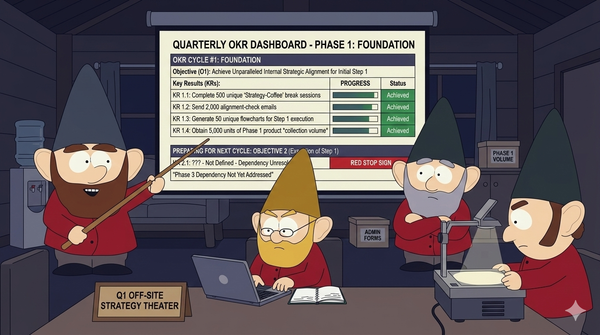
The Danger of Vanity Metrics in OKR Cycles
Your OKR dashboard is green. Every metric trends up and to the right. But revenue is flat, churn is rising, and nobody can explain the gap. You have a vanity metrics problem.
Your OKR dashboard is green. Every metric trends up and to the right. But revenue is flat, churn is rising, and nobody can explain the gap. You have a vanity metrics problem.
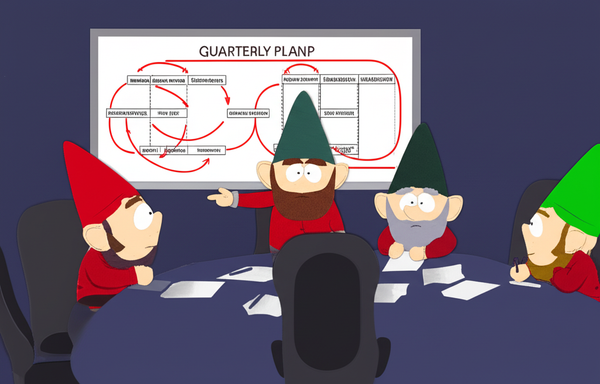
Every quarter, your team commits to ambitious goals. Every quarter, you fall short. It's not a motivation problem — it's the planning fallacy. Until you account for it, your quarterly planning is fiction.
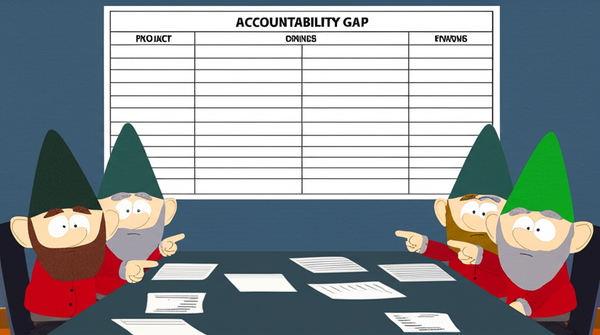
Your OKR has an owner. Technically. In practice, ownership is split across teams, blurred by matrix structures, and diluted by shared responsibility. When everyone owns it, nobody does.
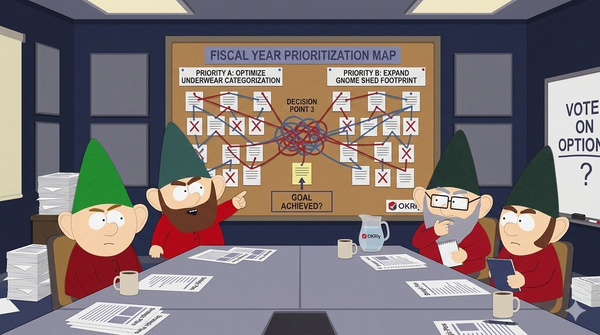
Two priorities compete for the same engineers, the same sprint, the same quarter. Both matter. Both have executive sponsors. And your team is stuck, waiting for someone to make a call that never comes.
Your weekly check-in follows the same pattern every week: everyone reads their status, the manager nods, and the meeting ends without a single decision made. Here's how to fix it.
You can tell an organization is misaligned by how many meetings have 'alignment' in the title. If alignment could be achieved by sitting in a room together, your company would be the most aligned organization on earth.
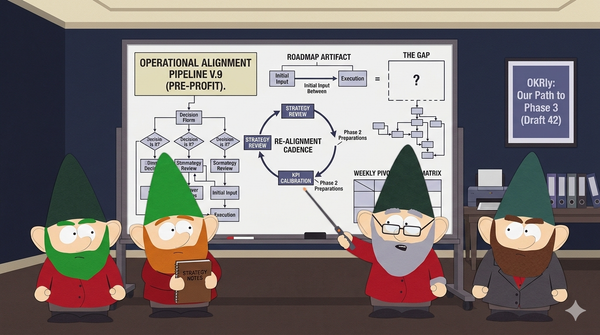
Strategy is often treated as a permission structure. It should be the opposite: a deliberate constraint system that tells teams what's out of bounds so energy concentrates instead of disperses.
Inspiration moves people emotionally. Direction tells them where to move. When teams stall, the fix usually isn't a better speech—it's clearer priorities.
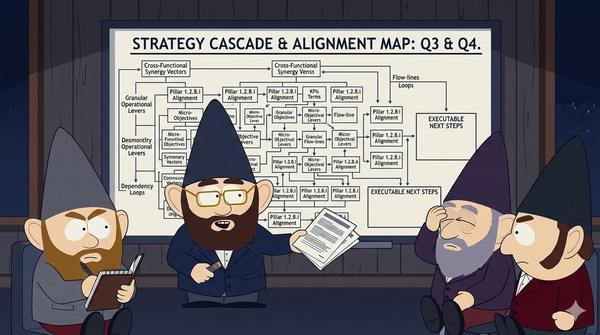
When leaders over-explain strategy, they create noise instead of clarity. Learn why explanation is often the enemy of execution — and what disciplined strategy communication looks like for operators.
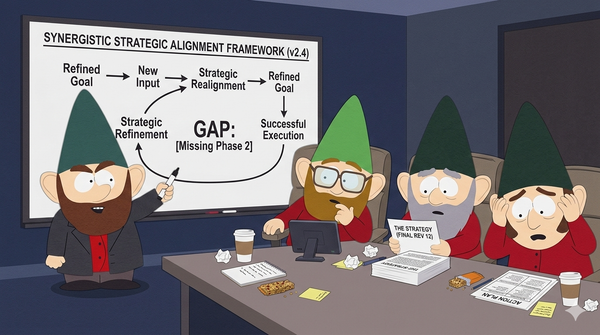
When strategy is vague or unrealistic, it doesn’t just hurt the business—it destroys team morale. Learn how to identify strategic drag, bridge the execution gap, and turn your high-level vision into a source of momentum rather than frustration for your operators.
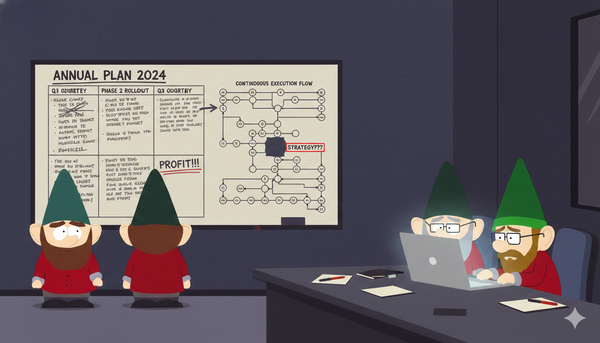
Annual plans are often obsolete by Q2. Learn how operators use continuous execution and rigid operating rhythms to bridge the gap between yearly strategy and weekly reality without the administrative overhead.
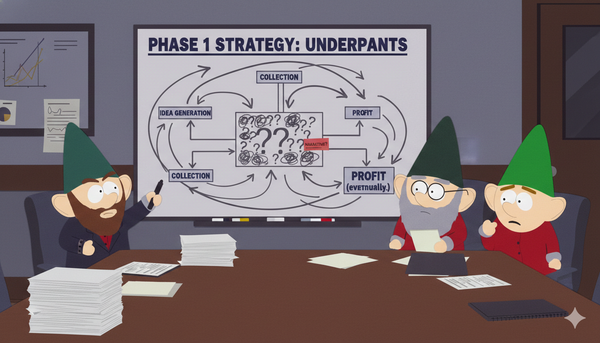
If you can't explain your strategy in three sentences without buzzwords, you don't have one. Learn why simplicity is the ultimate tool for executive clarity and how to strip away "strategic debt" to drive real team autonomy.
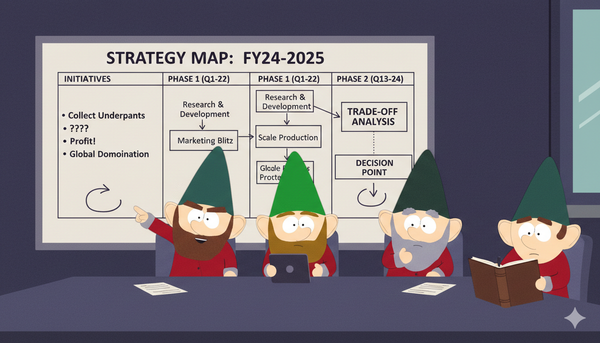
OKRs
Leaders say they prioritize, but most just approve everything and call it ambitious. Real strategy means killing good ideas to resource great ones.
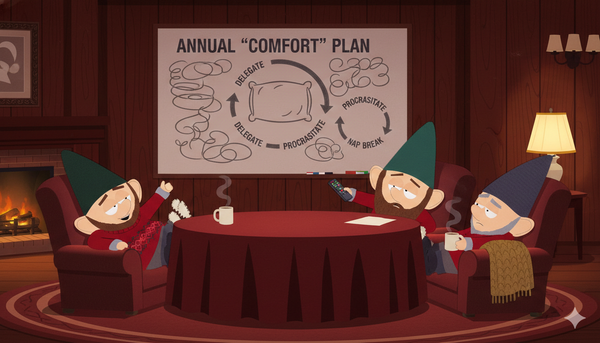
Execution
Annual planning provides the illusion of control but often kills agility. Learn why top operators are ditching 12-month roadmaps for continuous execution cycles and how to transition your team to a high-resolution operating cadence.
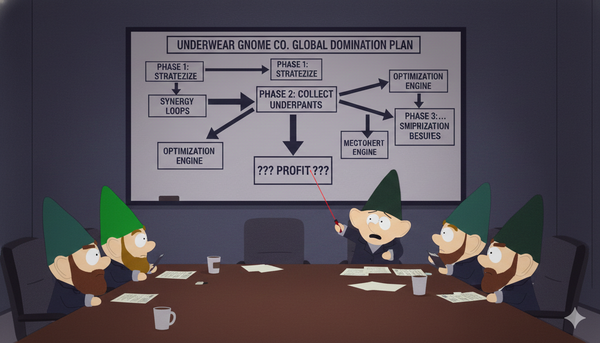
Execution
Strategy is a choice; execution is a behavior. Learn how operators build a "translation layer" to bridge the gap between high-level slides and daily reality, ensuring your team stays focused on what actually moves the needle.

OKRs
Quarterly strategy reviews feel productive—until nothing changes. The problem isn't your strategy. It's that reviews are built for discussion, not decisions. Here's why they fail and what actually drives execution.
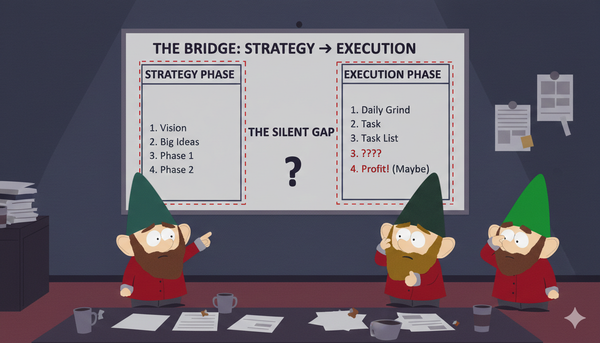
OKRs
Most companies don’t fail because they chose the wrong strategy — they fail because the strategy never made it to the ground. Here’s why the execution gap exists and how high-performing companies close it.
strategy execution
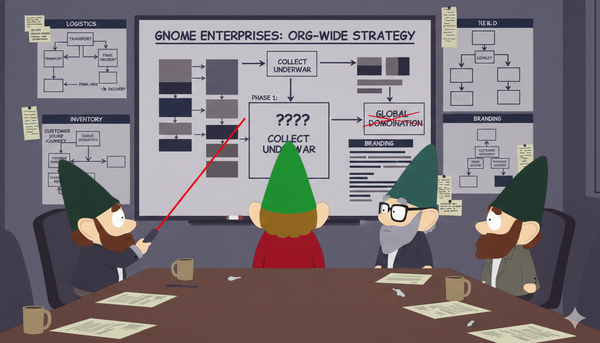
Strategy doesn't fail because the plan is bad; it fails because the "edges" of the organization—the people doing the daily work—lose context. Learn how to bridge the gap between executive intent and front-line execution.
OKRs
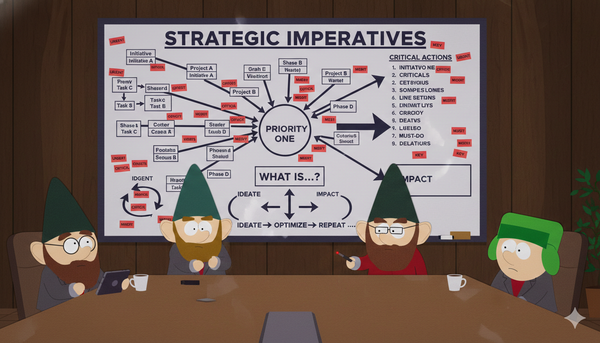
When you have ten priorities, you have none. Learn how to identify priority inflation, force executive trade-offs, and use OKRs as a filtering tool to drive actual organizational growth.

OKRs
Stop treating OKRs like a first date. Learn why "interest" kills execution and how experienced COOs build a culture of commitment to ensure goals actually get reached, rather than rotting in a spreadsheet by mid-quarter.
OKRs
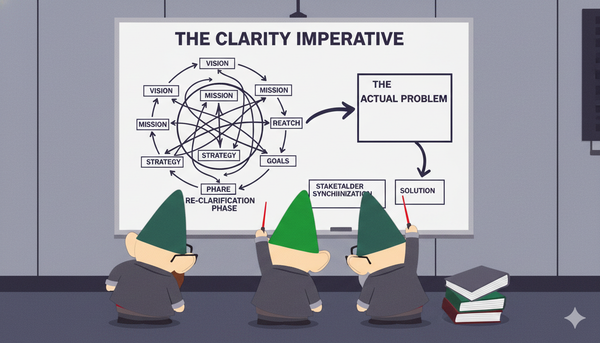
Most companies don't have a clarity problem—they have an execution gap. Learn why more communication won't fix your misaligned team and how to build systems that prioritize trade-offs, accountability, and operational rigor over generic "clarity."
OKRs
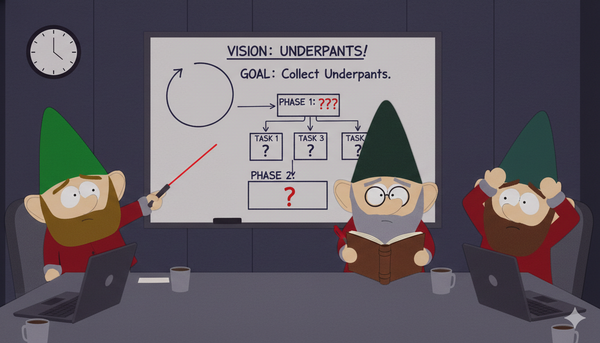
Setting goals is easy; designing the work to hit them is hard. Learn why most teams fail at execution by confusing strategic intent with operational reality, and how to build a causal link between your weekly tasks and your quarterly OKRs.
OKRs
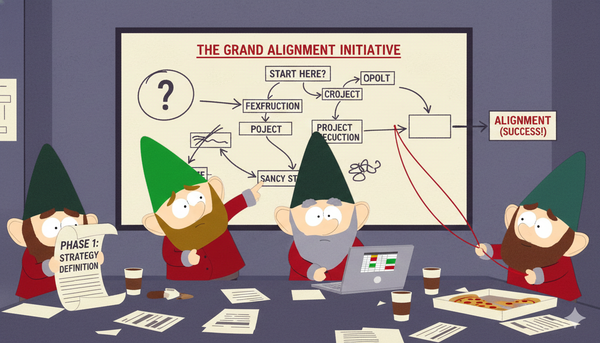
Stop waiting for consensus to start executing. This post explores why alignment is the output of a high-functioning cadence, not a prerequisite for action, and how operators can use OKRs to forge clarity through friction.
Strategy
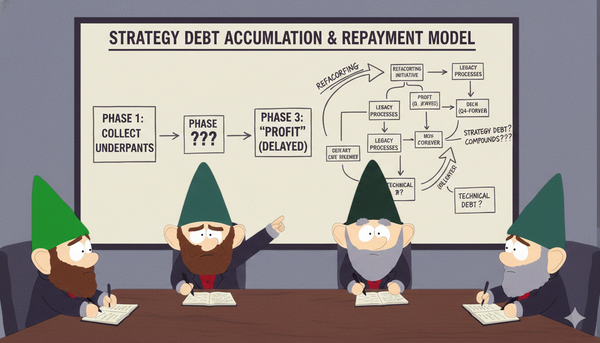
Strategy debt is the "interest" you pay on outdated decisions and zombie projects. Learn why this debt compounds, how to identify the symptoms of execution drag, and the operational steps required to pay it down before your company stalls.